Maas ko Daal - (कालो मास को दाल)
Jhaaneko Kaalo Maas ko Daal - (झानेको कालो मास को दाल)
Maas ko Daal, or black gram beans, need little introduction in Nepali cuisine. They are among the most loved type of daal, considered flavorful, satisfying, and extremely nutritious. Maas ko daal differ from other daals in that they are cooked in an iron pot (falaam ko tapke - फलाम को ताप्के). When simmered in this pot, the daal transform into deep black color with rich flavor. Jhaneko (झानेको), simply means adding more flavor to the cooked dishes. In this process, the oil or the clarified butter (gheu) is heated separately in a pan with several spices & herbs. It is cooked until the spices release distinct aroma and turn few shades darker, then the entire content is poured in the prepared dish. The preferred combination of spices for Maas ko daal is jimbu (Himalayan herb), whole dried red chilies, asafetida and fresh garlic to create an authentic taste.
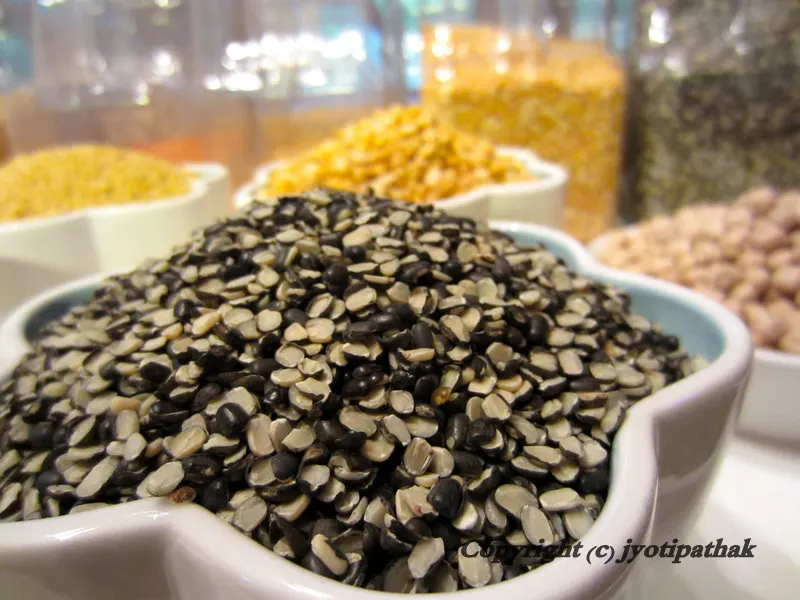
The Black gram is highly prized pulse corp grown all over warm temperature and sub-tropical temperature area of Nepal.
Botanical Name - Phaseolous mungo L., Vigna Mungo
Black gram Common names - They are also known as Urad Daal, Urad Beans, Black Lentil or Maas ko Daal. The seed color of Maas varies according to types. The types with shining black, green and dusky black colors are grown in Nepal. The dusky seeded type is regarded as the best type - (source - An introduction to Nepalese plants - Regmi)
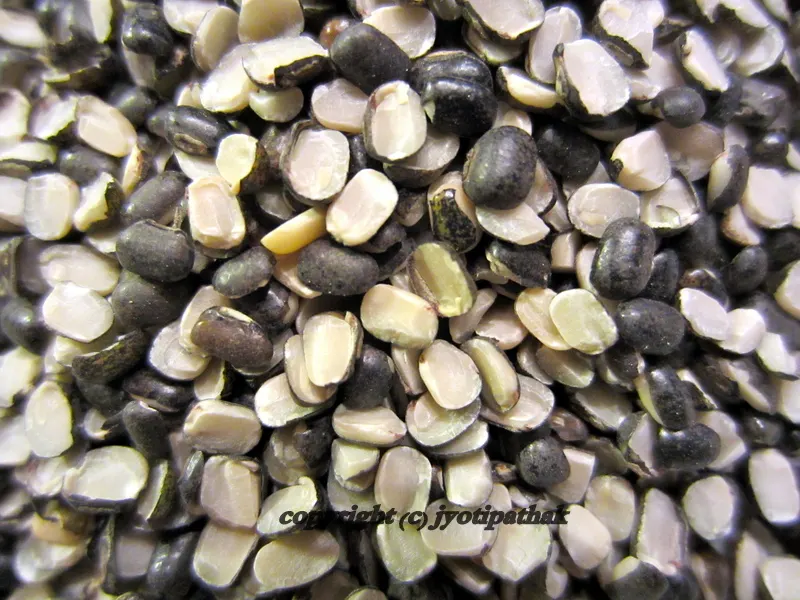
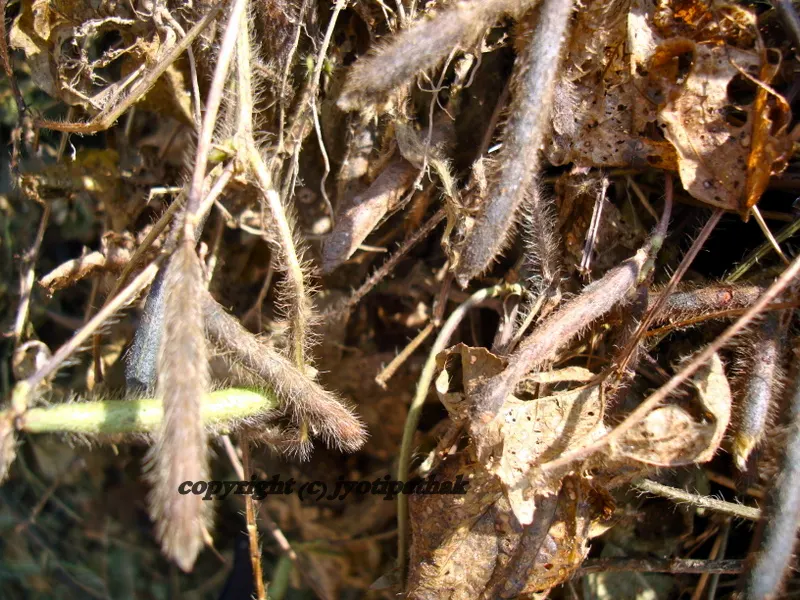
Capturing the picture of the plant - A day in the village of Geetanagar-Amarbasti area in Chitwan District in the Narayani zone of Southern Nepal. Here is a image of vigna mungo plant captured by me. The villagers were busy harvesting Maas ko Daal by their traditional methods - pulling the plants, cutting, threshing and gathering the seed pods. While taking pictures, the village woman were whispering to each other, "here ne kuirini le tashbir khicheko" - (translation - look a kuhirini is taking picture of maas ko daal)..... I replied them smilingly in Nepali - "Me bideshi-kuirini hoina, baahir dherai baseko matrai - (translation - I am not kuirini, but lived outside Nepal longer). The word kuirini is a Nepali slang word for tourist. I can understand why they thought I was a tourist, because they have never seen any Nepali people taking picture of the farm and the harvesting in that area.
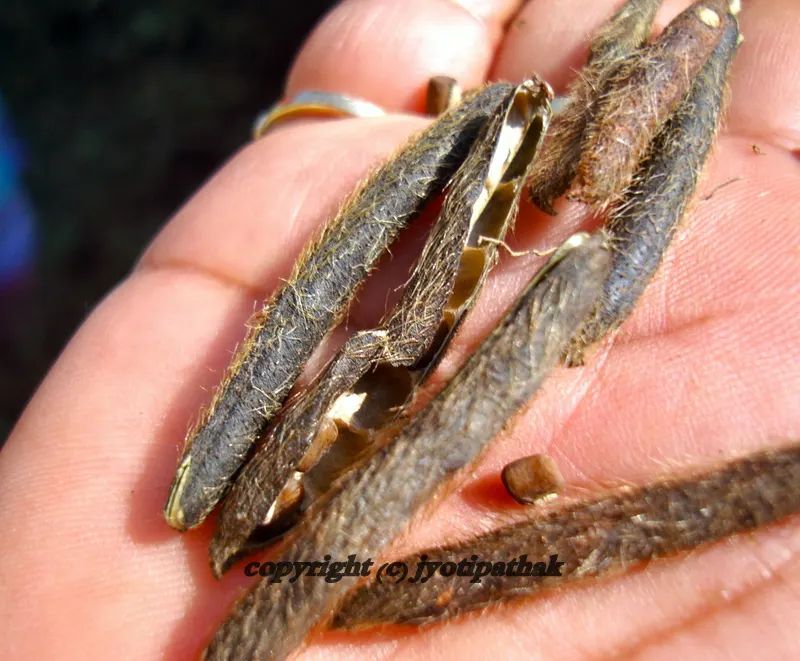
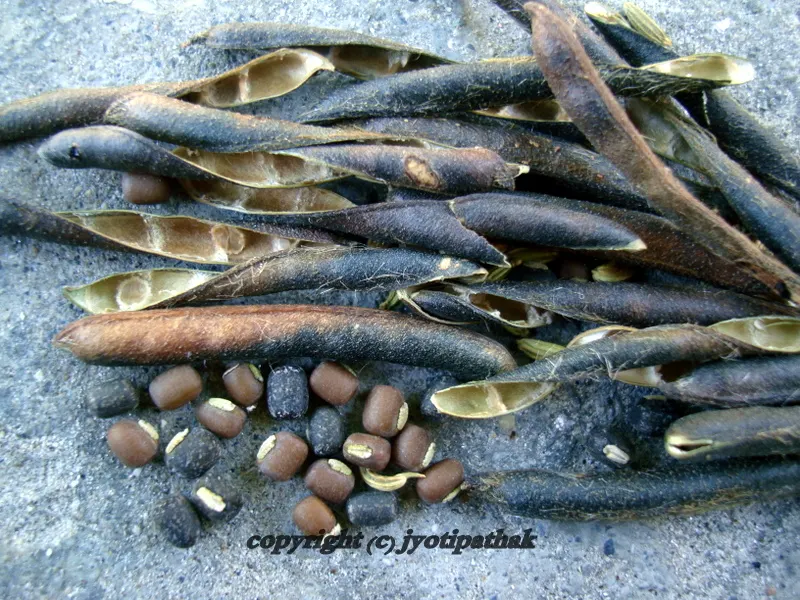
Here is a picture of freshly harvested whole Urad Beans - the pods are narrow and cylindrical. The small beans looks similar to green mung beans in size and shape. Maas, Urad Beans, or Black Gram are used in three forms:
- Singo Maas ko Daal - Whole Urad Beans (with skins)
- Maas ko Chhata Daal - Split White Urad Beans (without skins)
- Kaalo Maas ko Daal – Split Black Urad Beans (with skins)
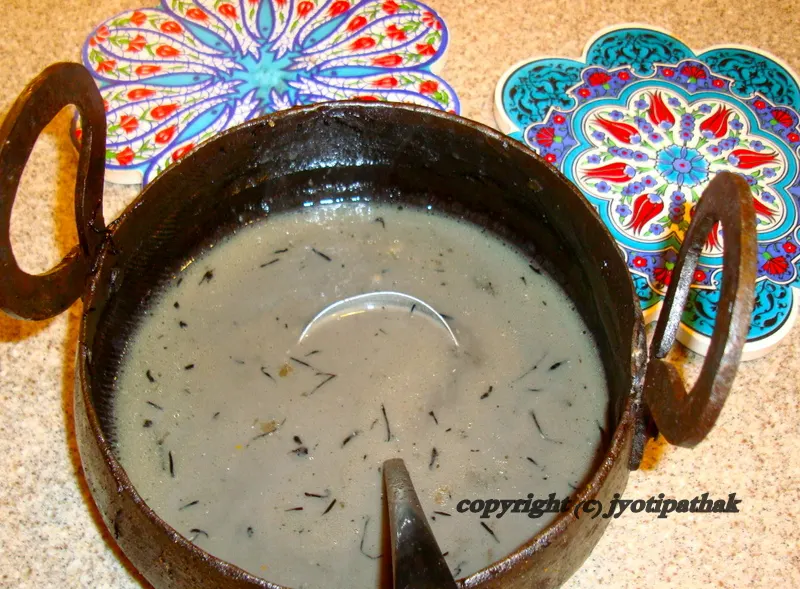
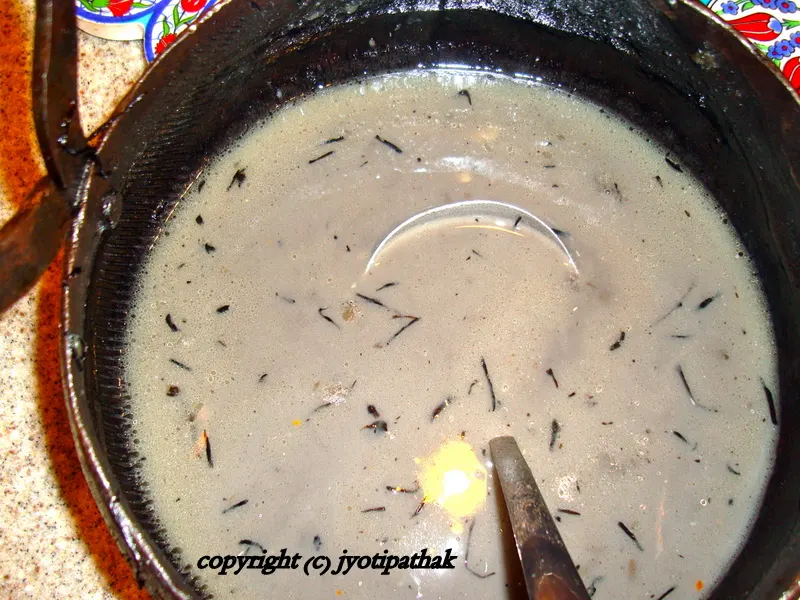
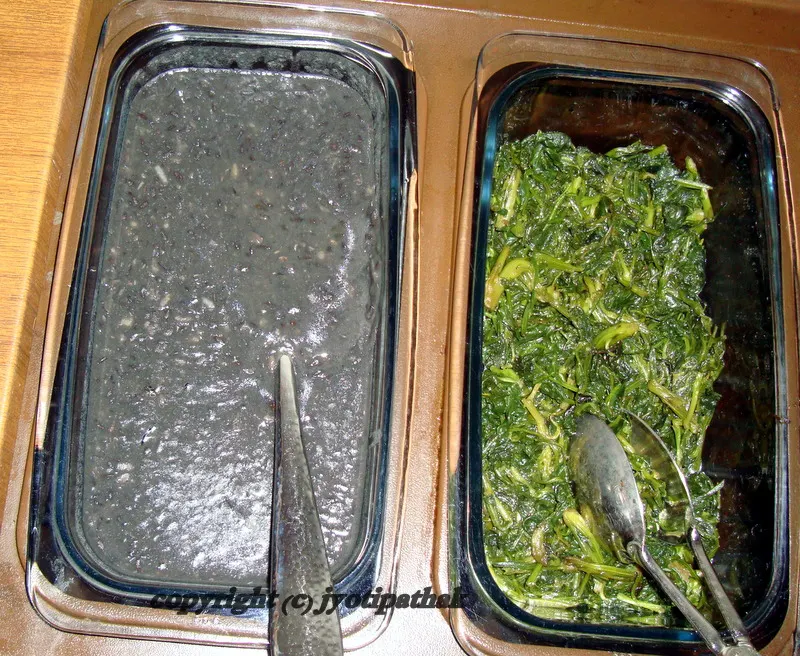
In the above picture black daal is served with Raayo ko Saag (Mustard Greens), along with rice and other dishes. Daal is best served immediately, but can be reheated on the stove top adding small amount of water before serving. Nepalese prefer their daal in the consistency of soup than thick form.
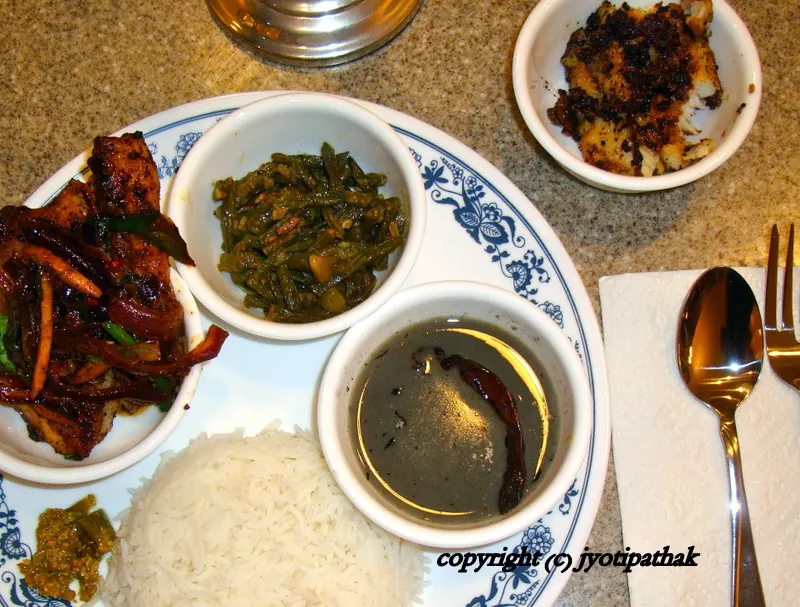
Home-made Daal-Bhaat-Tarkaari - Buttered rice, Jhaaneko Kaalo Maas ko Daal, Green Beans, Chicken Curry, fried fish and pickle. I have uploaded several pictures of "Daal-Bhaat-Tarkaari" in my previous blog, and to view more images of Kaalo Daal served with the combination of rice and other dishes, please click here.
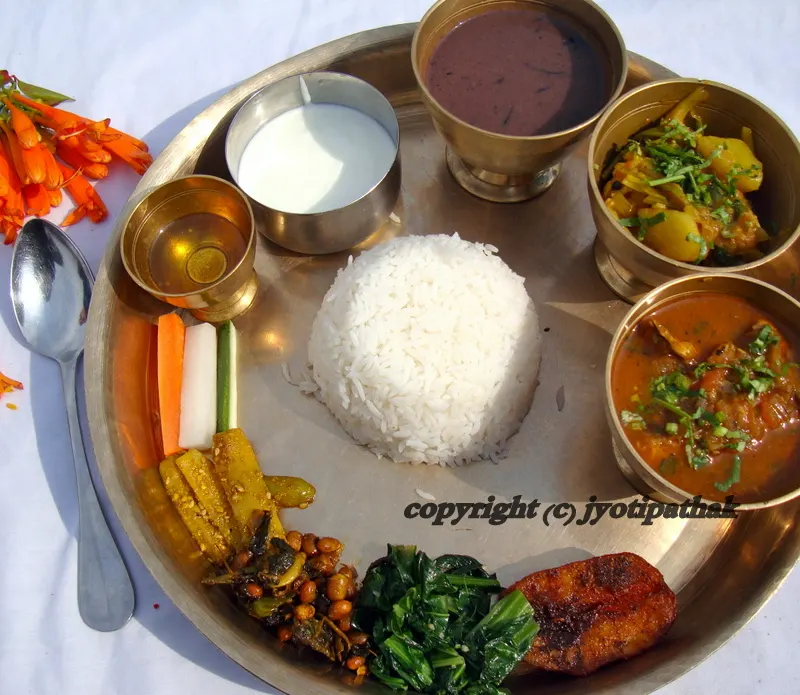
Nepali Thaali served at the Lychee Garden Resort, Pokhara, Nepal, on the other side of Fewa Taal. It is best known for its Nepali Thali which has steamed Rice, Kaalo Daal or Mustang Daal (lentils), Jomsom Potatoes, Pickles, Yoghurt, Seasonal Vegetable Curry and a choice of Chicken, Goat Meat, Fish or Buff. Additional items popular on the menu are its grilled fish, and grilled chicken.
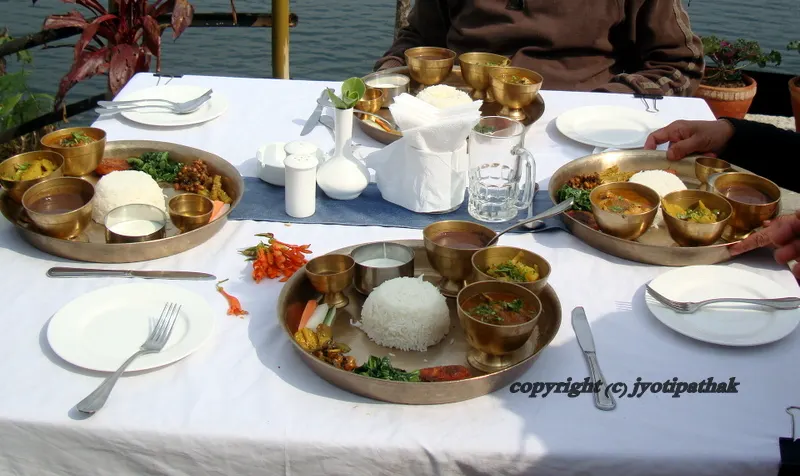
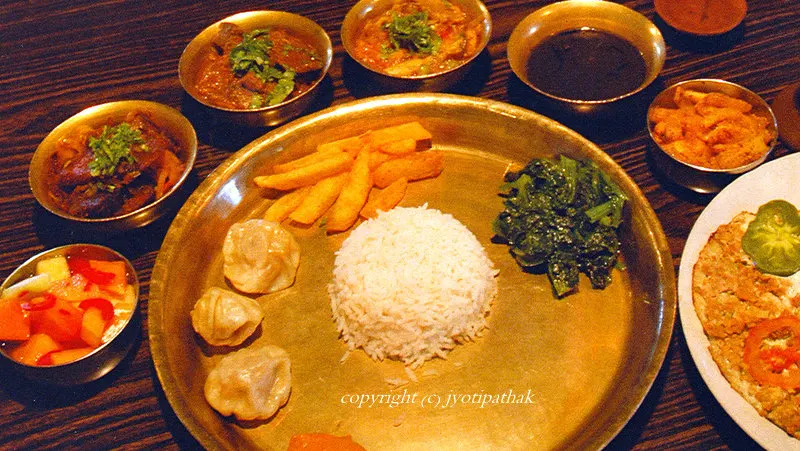
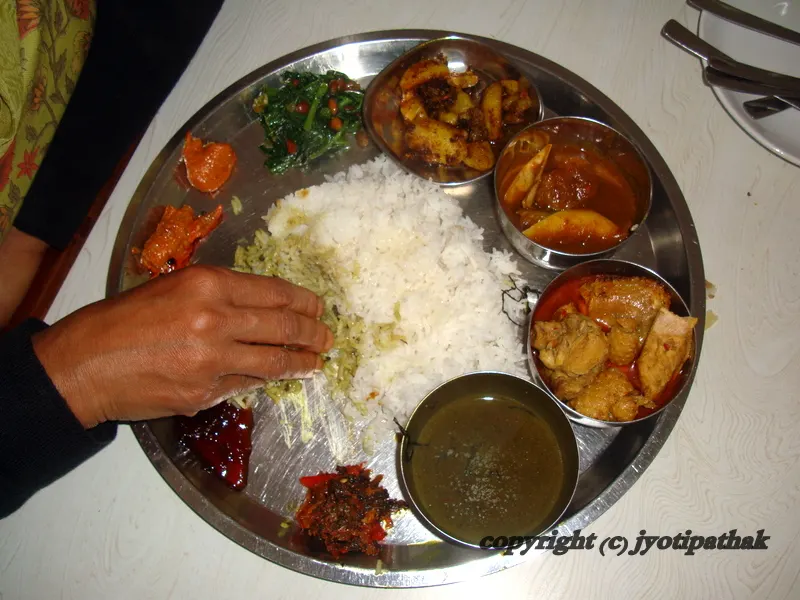
Enjoy the freshly cooked Nepali Daal-Bhat-Tarkari served with tempered black daal. Here is how I cook my daal. Recipe follows....
Recipe - Jhaaneko Kaalo Maas ko Daal - (झानेको कालो मास को दाल)
1 cup split black Urad beans, with skins
1 tablespoon finely julienned fresh ginger plus 1 1/2 teaspoon minced
Salt to taste
1/2 teaspoon ground turmeric
1/8 teaspoon Szechwan pepper (timmur)
3 tablespoons clarified butter (gheu)
2 to 3 dried red chilies, halved and seeded
1/2 teaspoon Himalayan herb (jimbu)
A generous pinch ground asafetida
2 large cloves garlic, thinly sliced
Directions
Combine
the beans, minced ginger, salt, turmeric, Szechwan pepper, 1
tablespoons of the clarified butter, and 3 1/2 cups of water in a deep,
heavy pot (or falaam ko taapke - फलाम को ताप्के). Bring the
mixture to a quick boil over medium-high heat, uncovered, stirring
occasionally to make sure the beans do not boil over or stick together.
Cook for about 20 minutes. Reduce the heat to low, cover, and simmer
gently until the beans are tender and have doubled in volume, about 55
minutes. If necessary, all more water to attain a soupy consistency,
and simmer 5 more minutes. Remove the pot from the heat and set aside.
In a small skillet, heat the remaining 2 tablespoons of clarified butter over medium-high heat. Add he chilies and jimbu, and fry until light brown and fragrant, about 5 seconds. Add asafetida, then immediately add he julienned ginger and garlic, and fry until crisp, about 10 seconds. Immediately pour the entire mixture into the daal and stir well. Cover and allow the seasoning to develop for 5 minutes. Transfer the daal to a serving dish and serve hot. The daal will thicken if not served at once, so reheat it with 3 to 4 tablespoons of water if it needs to be warmed again.
Makes 4 to 6 servings
Copyright Information
All information on the Taste of Nepal blog are restricted use under copyright law. You may not re-use words, stories, photographs, or other posted material without the explicit written consent and proper credit to Jyoti Pathak. If you would like to use any materials here, please contact me.