Luffa Gourd - Gheeraula (घीरौला, पाटे घीरौला)
Luffa Gourd - (घीरौला, पाटे घीरौला )
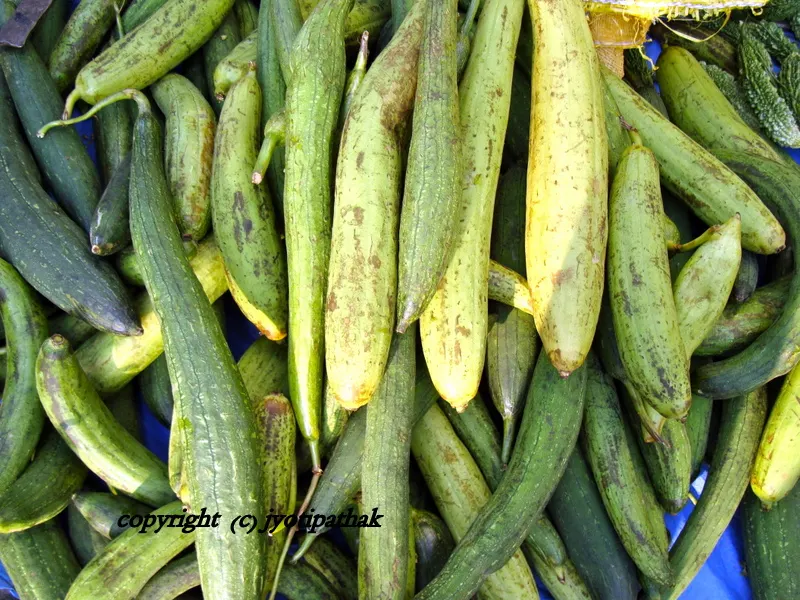
The following are the two varieties of Luffa Gourd - one with smooth skin and another is ridged skin are the member of Cucurgitceae (gourd) family. It is widely grown in Nepal for cooking purpose. Both species have climbing vines, cooked similar way and is very popular vegetable item in Nepal.
Angled Luffa Gourd - Patee Gheeraula (पाटे घीरौला)
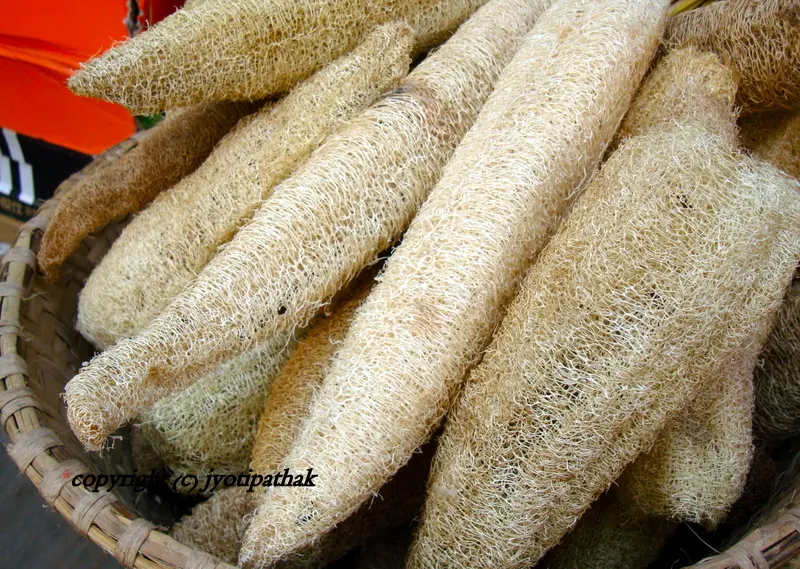
Angled luffa is called pate-gheeraula, is also known as ridged luffa, angled gourd, or Chinese okra. It is long and narrow gourd, with sharply ribbed skin. Only the young or immature luffa is used for cooking, once mature they develop a sponge-like fibrous texture and becomes bitter.
Smooth Luffa Gourd - Gheeraula - (घीरौला)
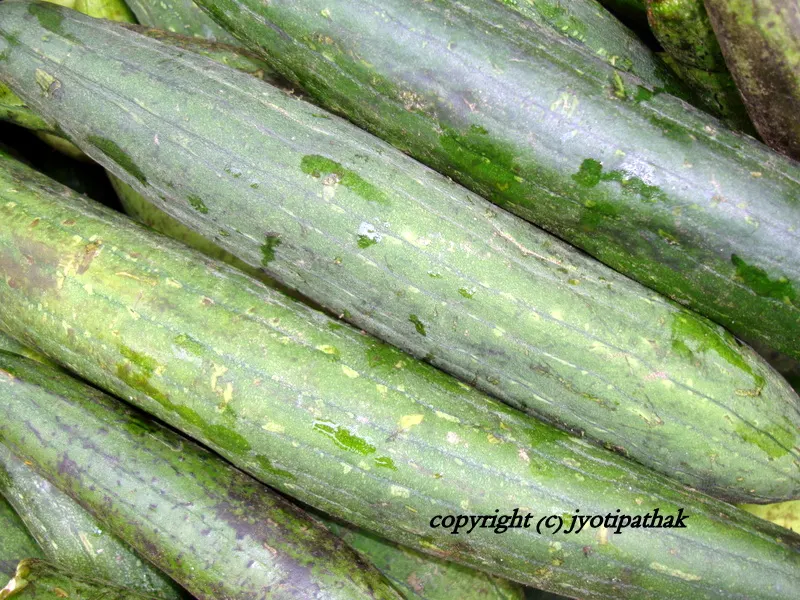
The smooth luffa is also known as silk gourd, sponge gourd, or toriya and is an extremely popular vegetable in Nepal. It resembles a long cucumber with a smooth green skin marked by fine longitudinal lines. The young gourd is sweet with a delicate and distinctive taste.
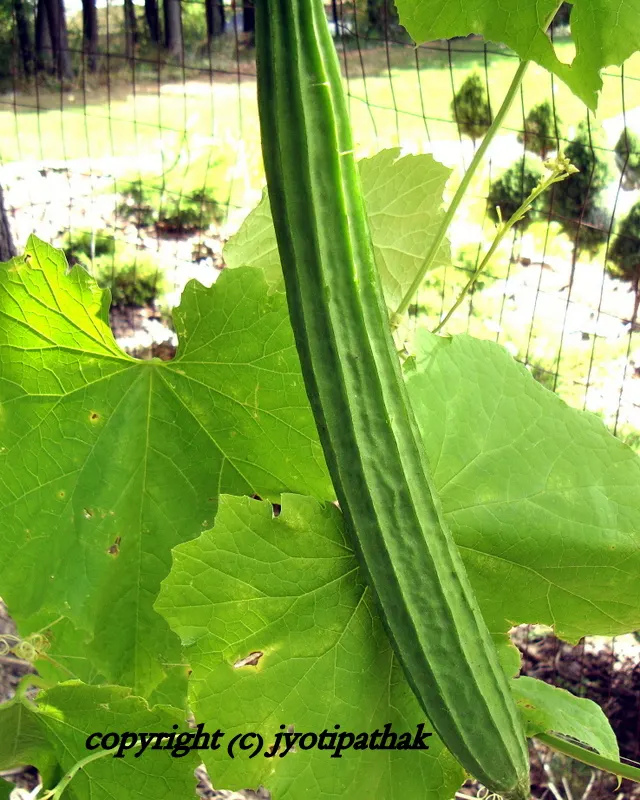
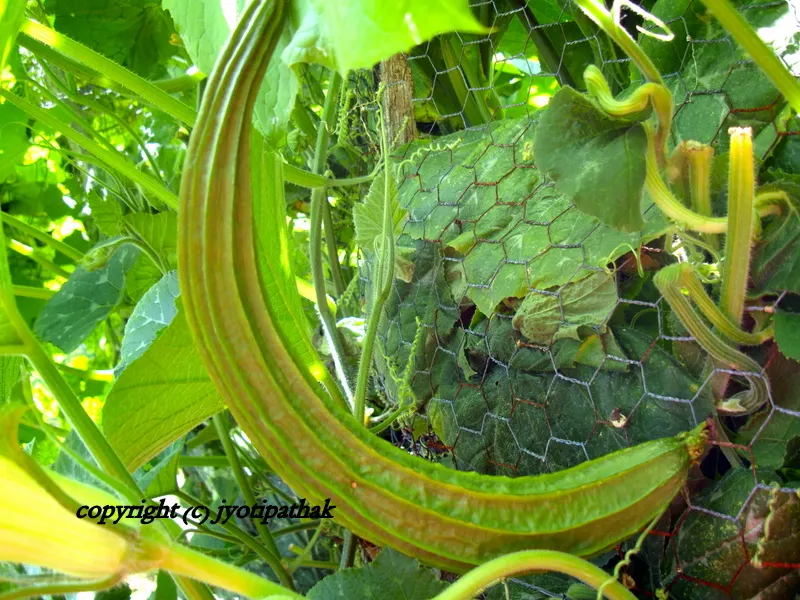
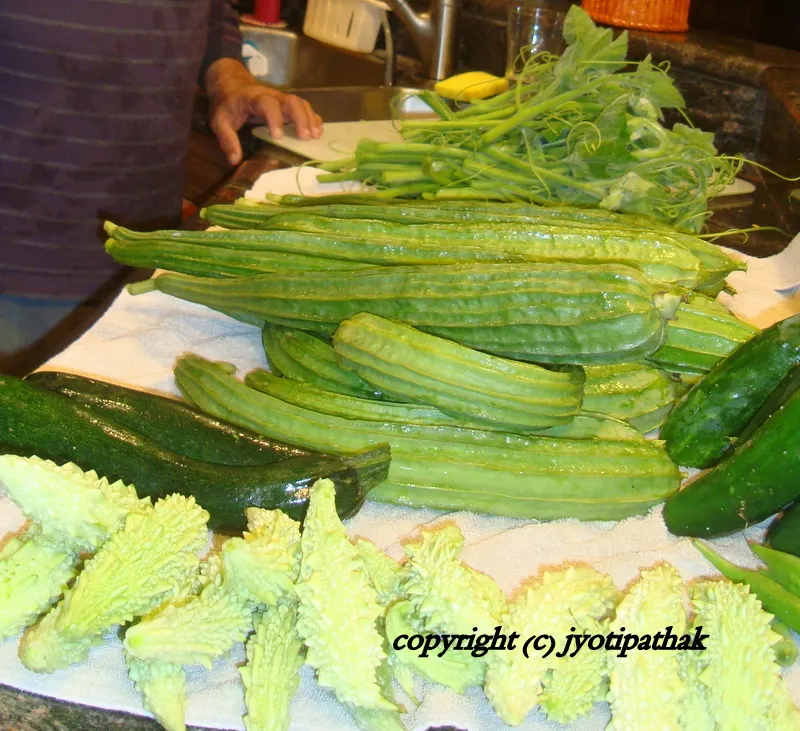
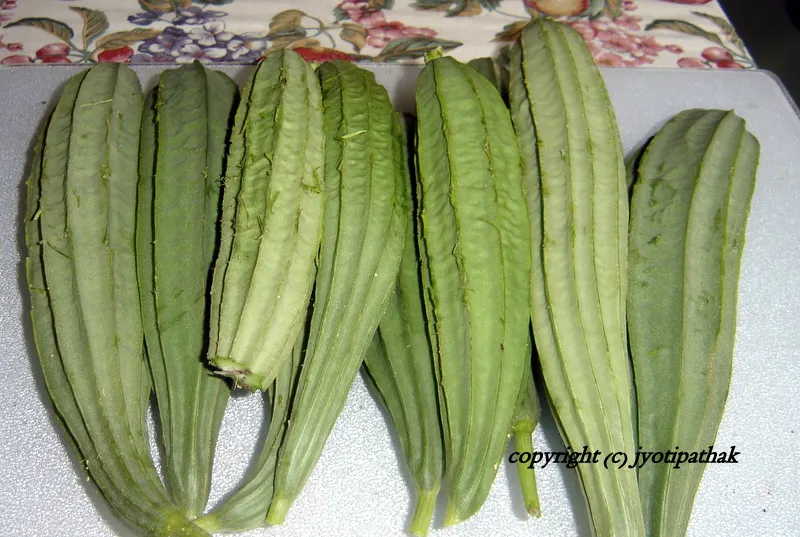
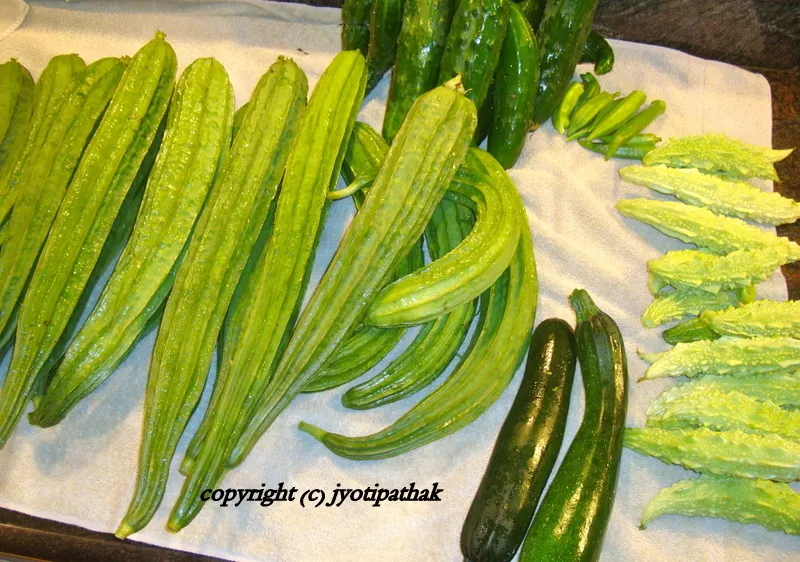
The young fruits are edible when they are tender or immature. Once they mature, they form sponge-like fibrous texture and become bitter and inedible. Luffa gourds are cooked like any squash vegetable. Before cooking, you have to remove all the ridges, leaving only smooth creamy-white flesh, and make sure to scoop out all the matured seeds and fibers.
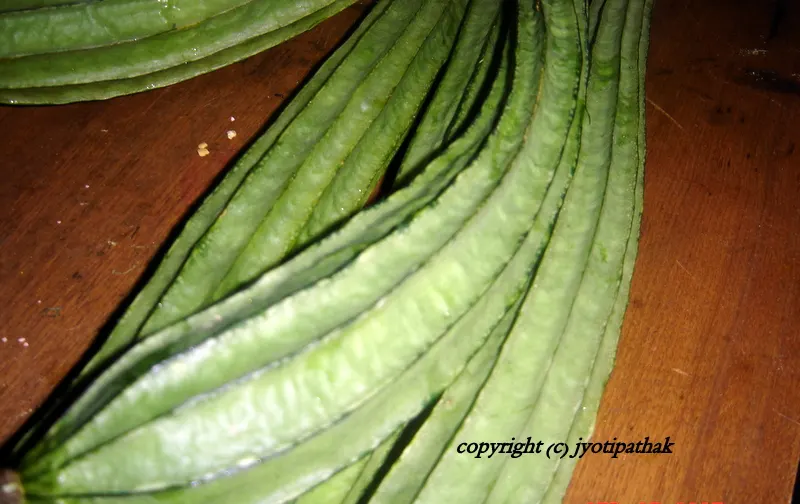
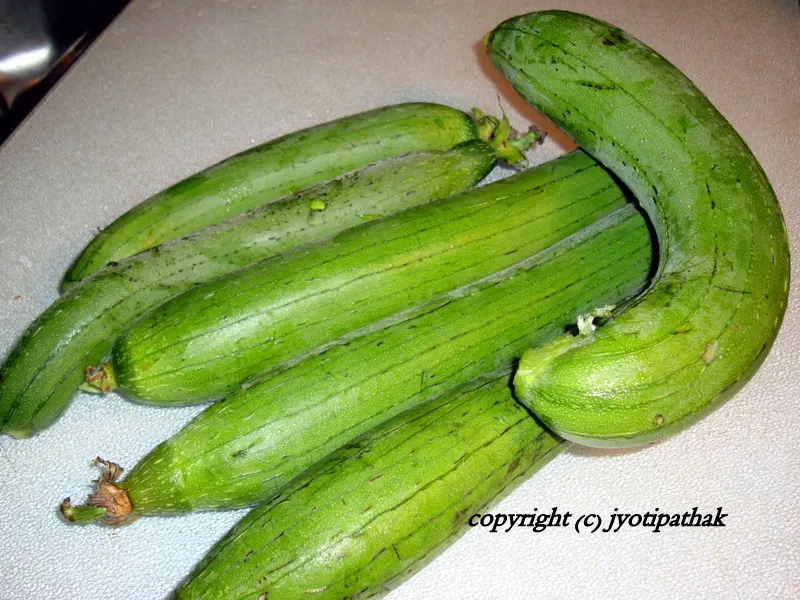
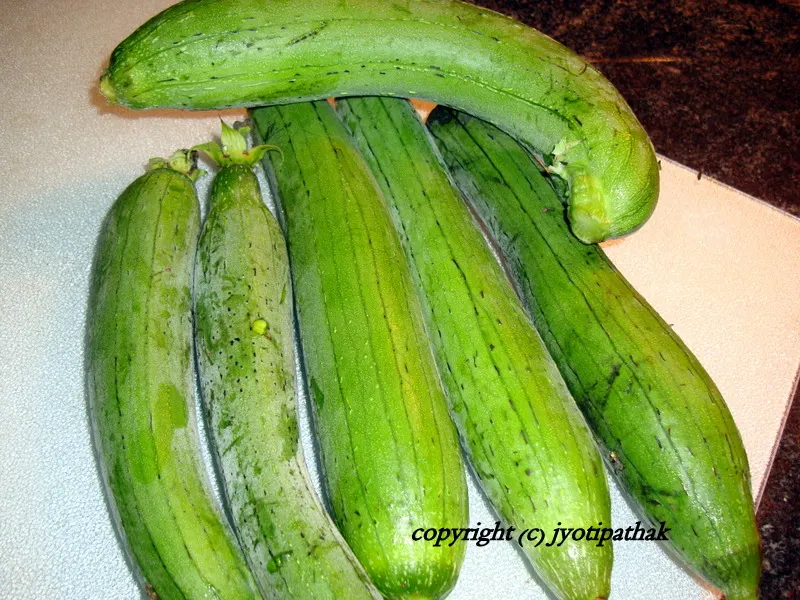
Here is another picture of freshly picked homegrown Gheeraula. The mild tasting vegetable has a delicious flavor and spongy texture. It can be cooked by itself or combined with potato, radish or other vegetables. The gourd takes the flavor of whatever other ingredients it is paired with.
Copyright Information
All information on the Taste of Nepal blog are restricted use under copyright law. You may not re-use words, stories, photographs, or other posted material without the explicit written consent and proper credit to Jyoti Pathak. If you would like to use any materials here, please contact me.