Juju Dhau (The King Yogurt from Bhaktapur, Nepal)
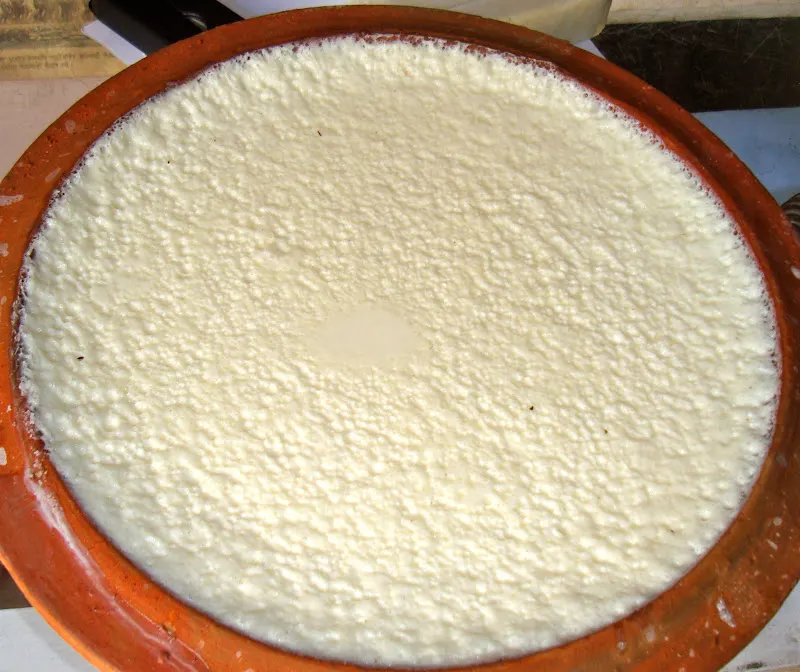
Juju Dhau (The King Yogurt from Bhaktapur, Nepal)
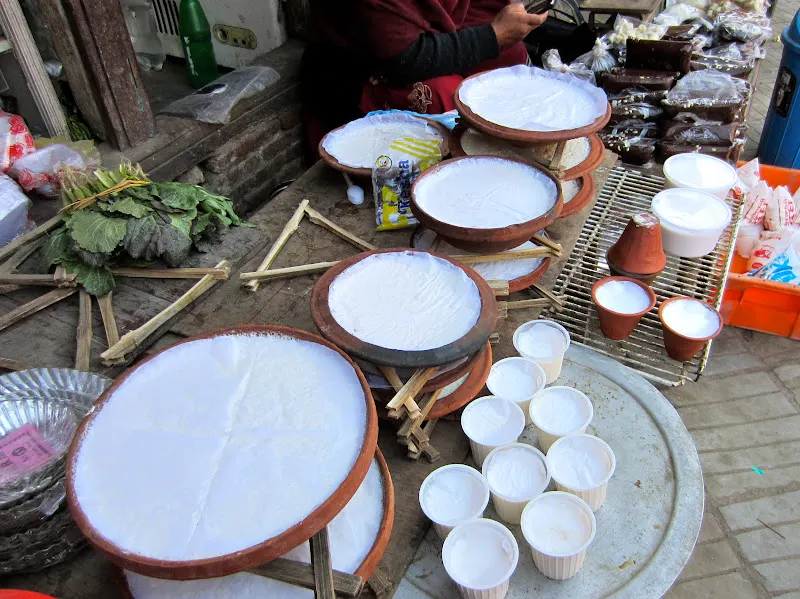
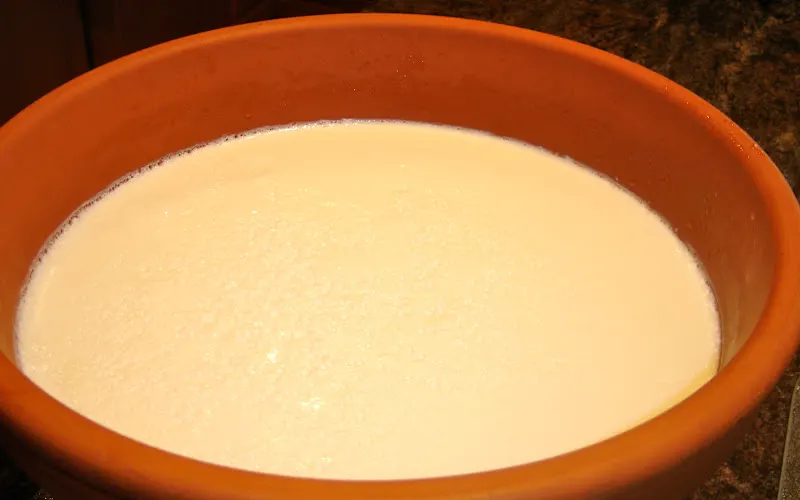
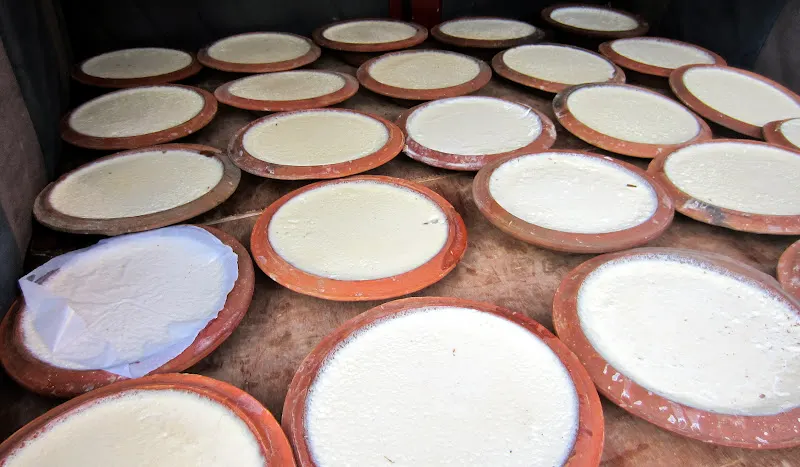
Juju Dhau is a sweetened custard-like yogurt that comes from Bhaktapur, Nepal,
and is an important component of all feasts and celebrations. Juju Dhau
literally means "king of yogurt" in the Newari language. While cow's
milk is used to make regular yogurt, fresh buffalo milk (bhaisi) is
traditionally used for Juju Dhau, resulting in a richer taste and texture.
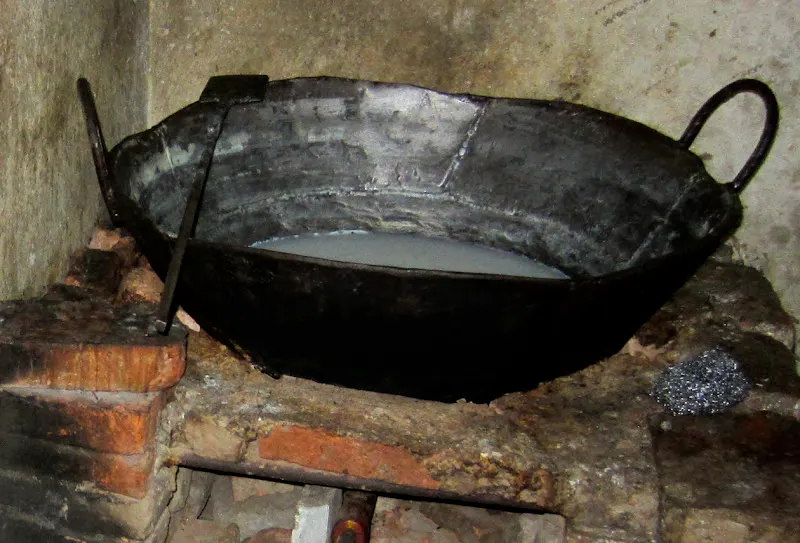
To make Juju Dhau, the milk is boiled, sweetened, mixed with culture, and
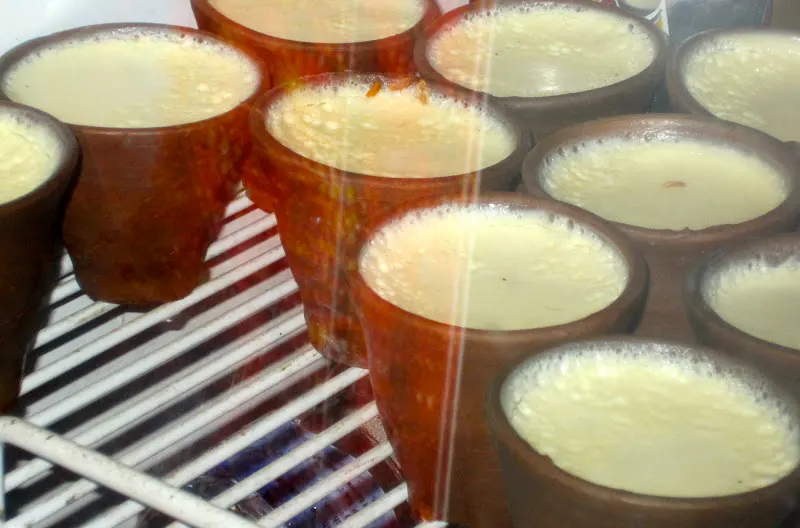
poured into decorative, natural red clay pot called maato ko kataaro. It
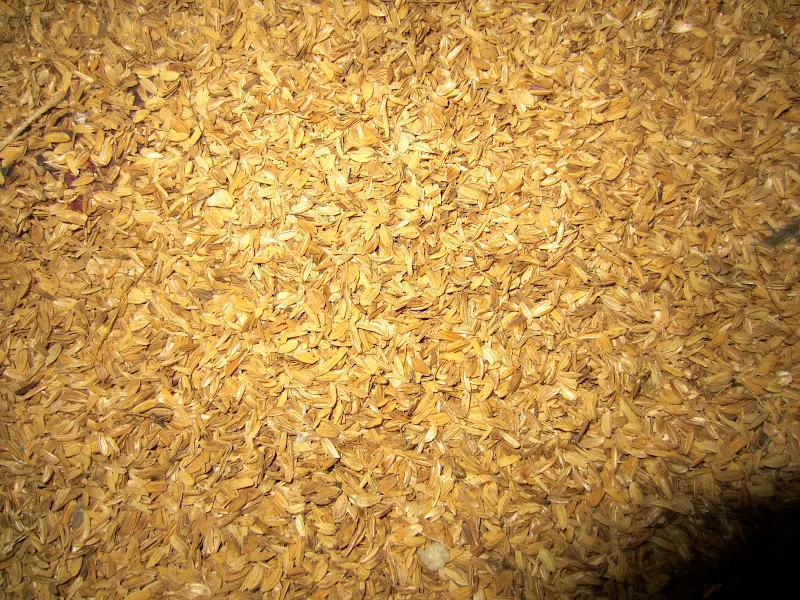
is then placed in a warm area, on a bed of paddy husks (the papery covering of
rice grains), covered with another kataaro on top, and wrapped in several thick
cotton blankets to maintain a warm temperature while the yogurt sets.
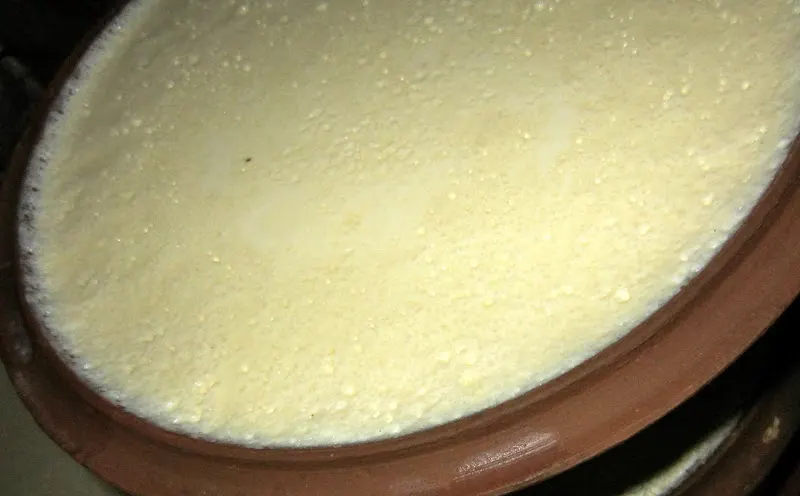
Because the clay pots are porous, the excess liquid from the yogurt
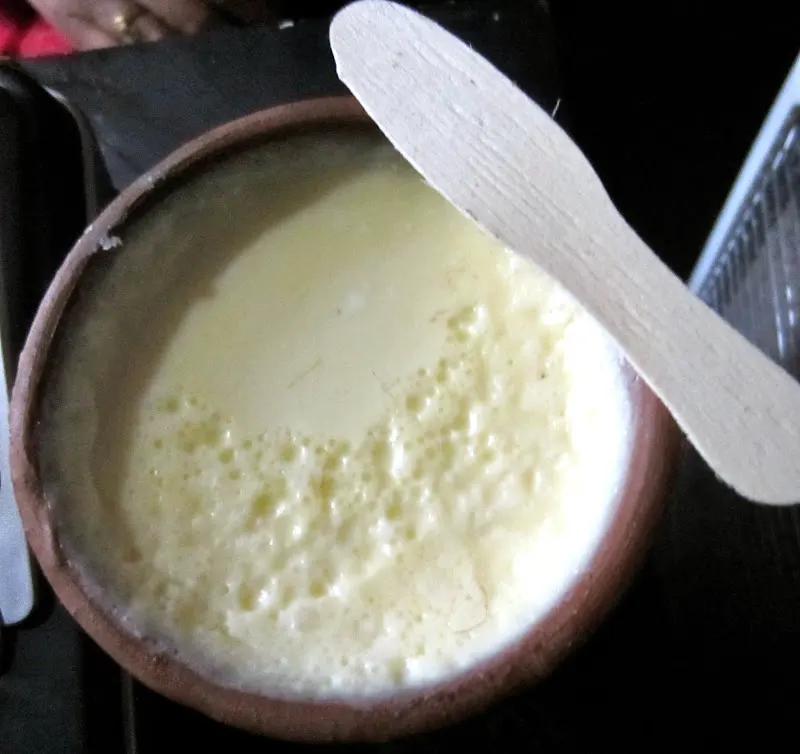
slowly evaporates, leaving a delicious, thick, smooth and creamy yogurt.
It is then transported and sold in the market in the same clay pots.
A visit to Bhaktapur is not complete without sampling a bowl of Juju
Dhau.
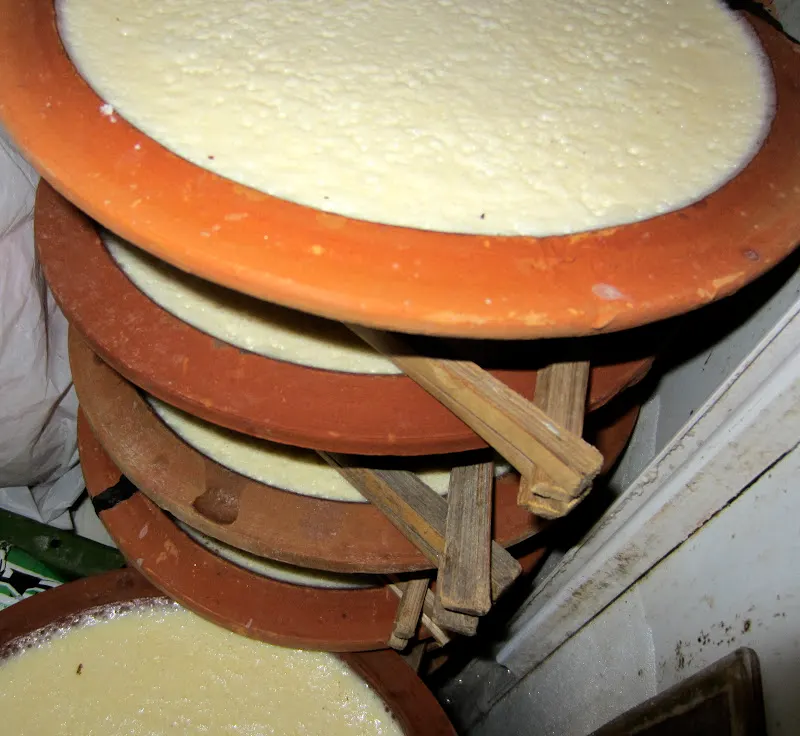
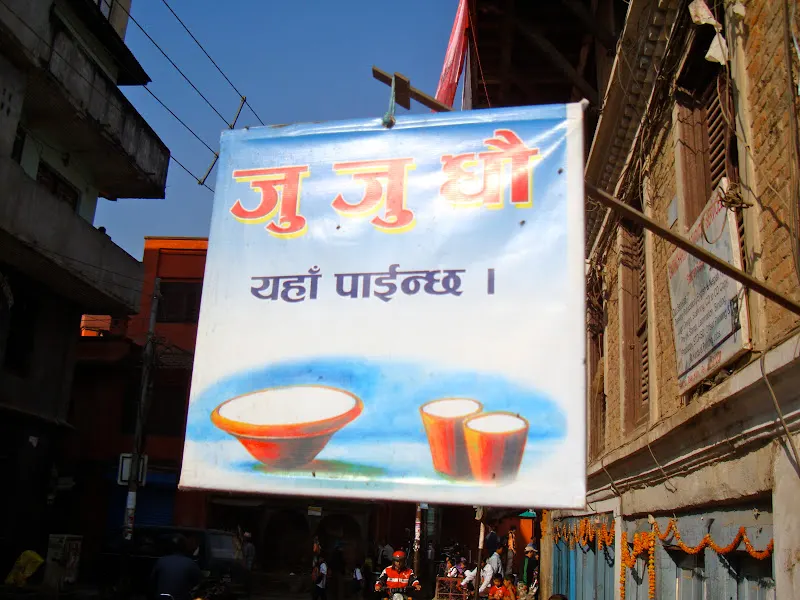
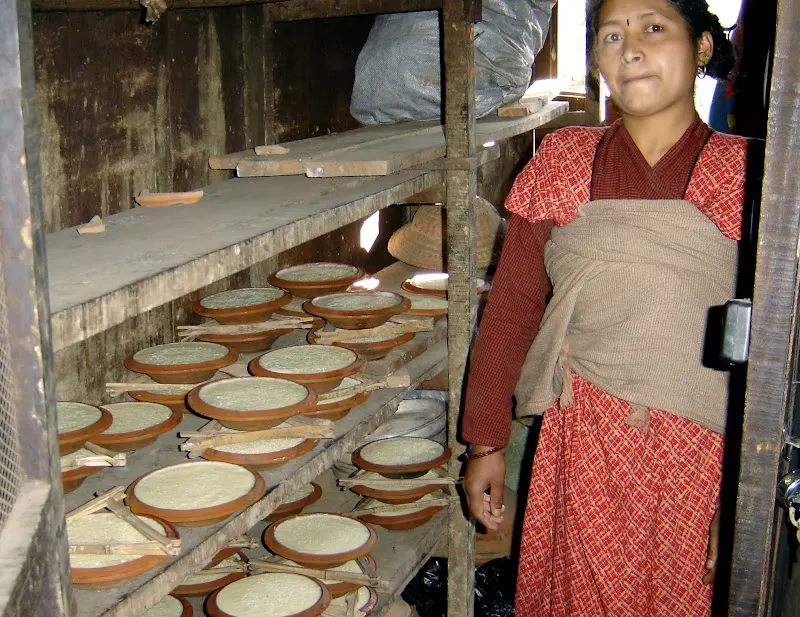
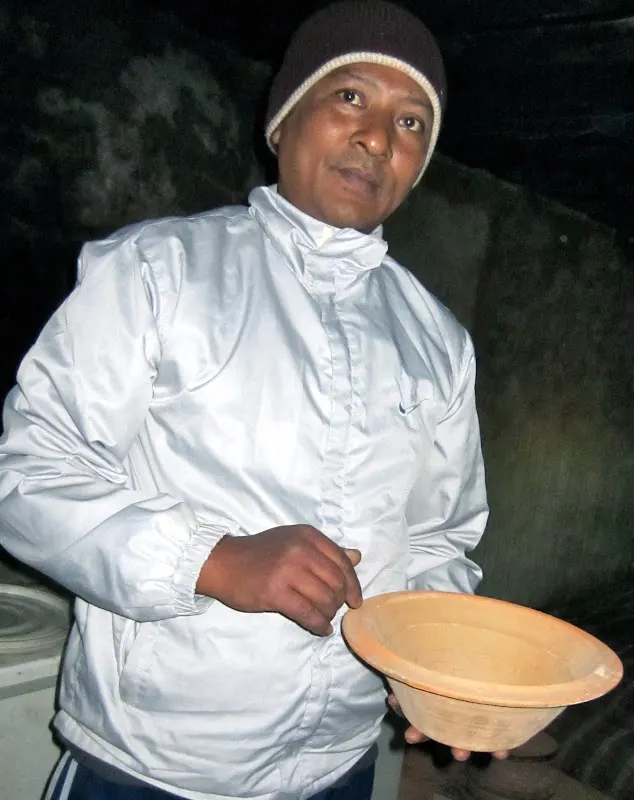
Mr. Nabin Pradhanang (3rd generation Juju Dhau maker) is giving us a tour of his yogurt making facility in Bhaktapur, Nepal. Walking through some narrow pathway from Dattatreya square, we arrived at his place in Bolache, where Juju Dhau is being made.
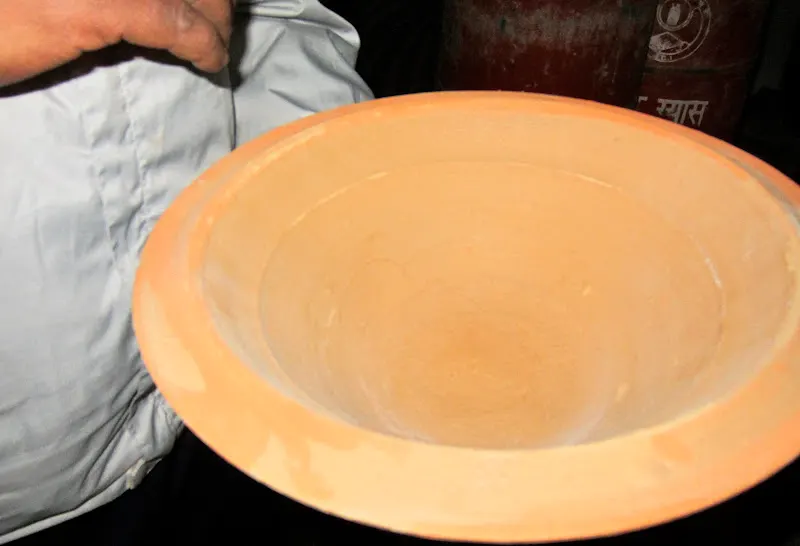
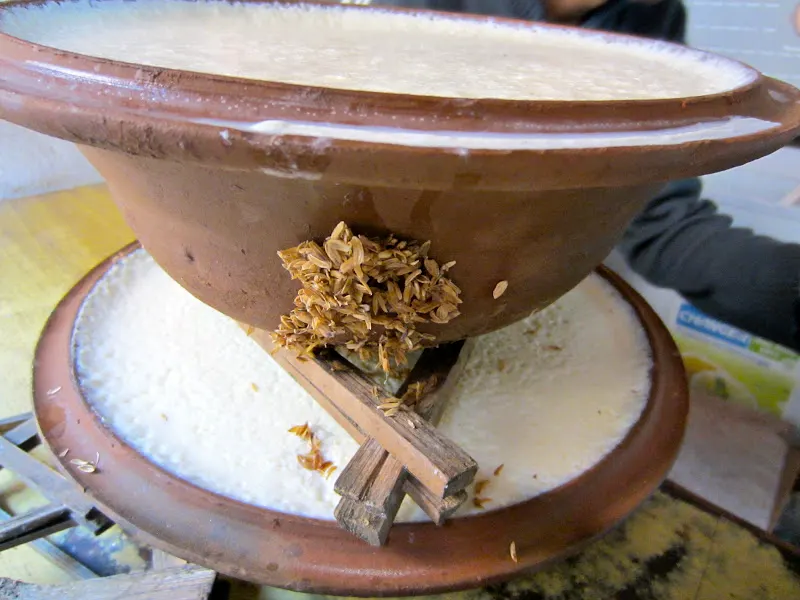
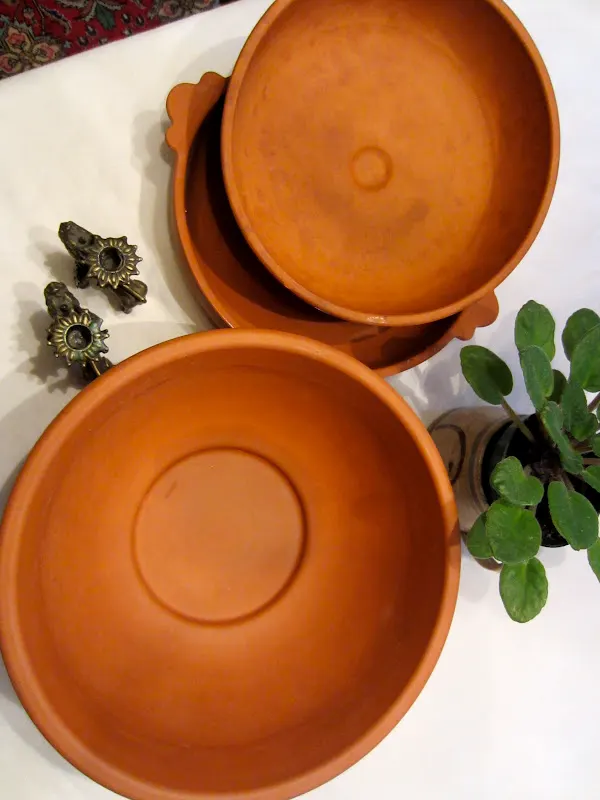
Picture of the unglazed natural clay pot (maata ko kataaro in Nepali, kala in Newari). The clay pot is porous, so the excess liquid or moisture from the yogurt slowly evaporates and makes a delicious, firm textured, creamy and thick yogurt. It also retains the proper temperature during the incubating period of yogurt making. The kataroo keeps yogurt cool in hot summer days. Juju dhau is sold in the same clay pot that it was prepared.
Before adding milk and starter culture, the kataaro is soaked in water for several hours and drained completely.
.
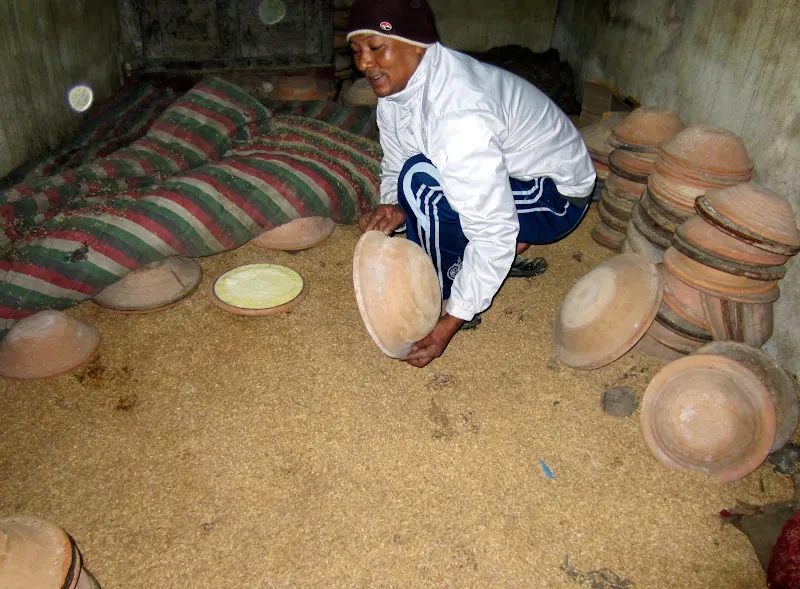
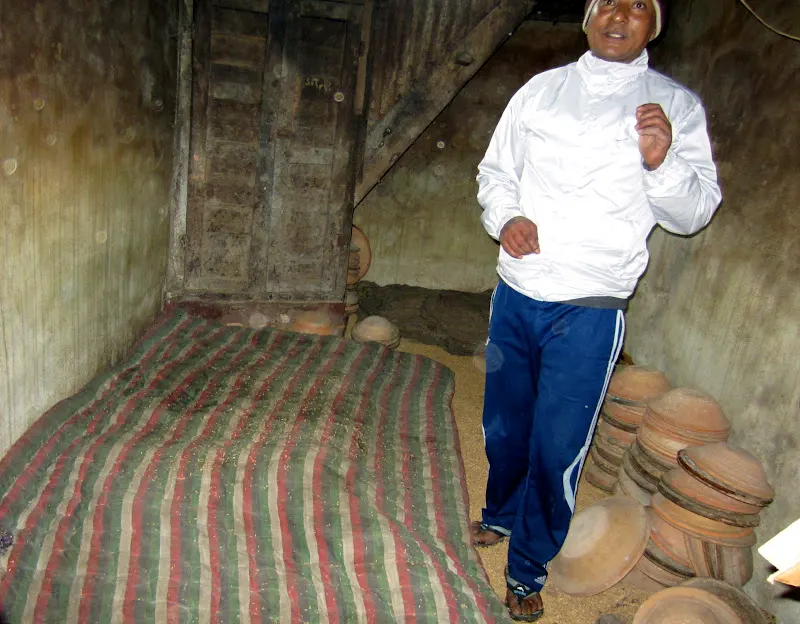
Mr Pradhanang is showing us how each kataaro is placed on top of a rice husk. It is then slowly filled with thickened milk. When the milk is slightly cooled, the starter culture (one spoonful at a time) is added to each container. Then, it is covered by another empty kataroo. A thick insulated cotton blanket (tagaeko oddane) is placed on top of the yogurt containers. It is then left undisturbed for several hours (average 3-4 hours in warm days, 5-6 hours in cold days) for the yogurt to set. The warmth of the room is necessary for the growth of the culture.
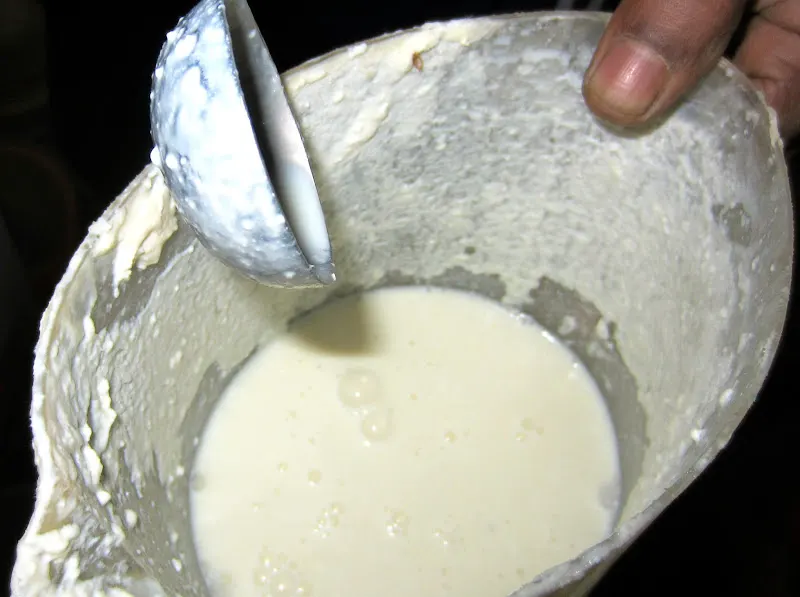
An active yogurt culture (previously made yogurt) is needed to start making a new batch of yogurt. The starter culture is called "dahi ko beu" in Nepali and "dhau pusa" in Newari. Mr. Pradhananga is showing us the "starter" which was saved from the last batch of juju dhau.
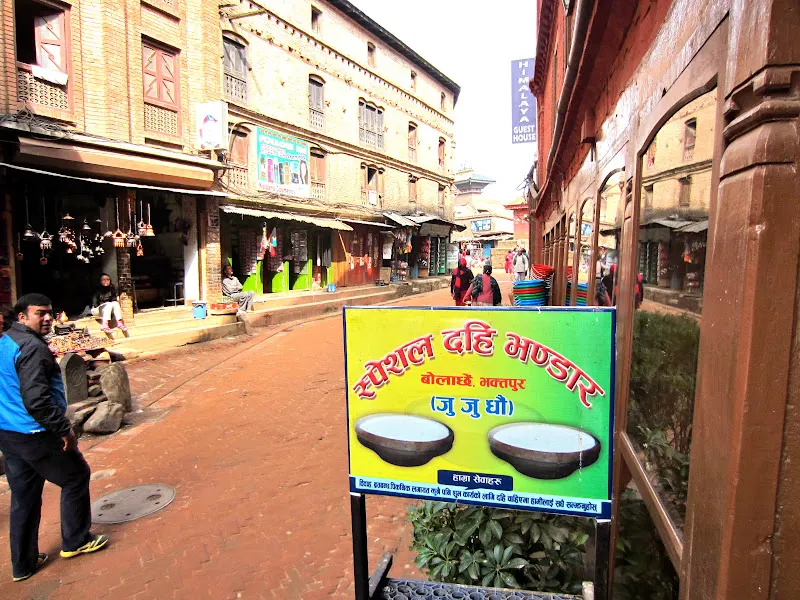
I would like thank my dear friend Madhu, who took me to Bhaktapur to observe the Juju Dhau making process. I am also grateful to Mr. Shyam S. Dhaubhadel, founder of Siddi Memorial foundation (Siddi Memorial Hospital and Briddhashram) also the owner of Cafe Nayatapola, Taumadhi square, Bhaktapur to arrange this tour. Thank you so much Mr. Nabin Pradhananga for showing me all the details of Juju Dhau making. In the above picture I have captured the picture of your store - indeed a special store in Bolache, Bhaktapur - Thank you!
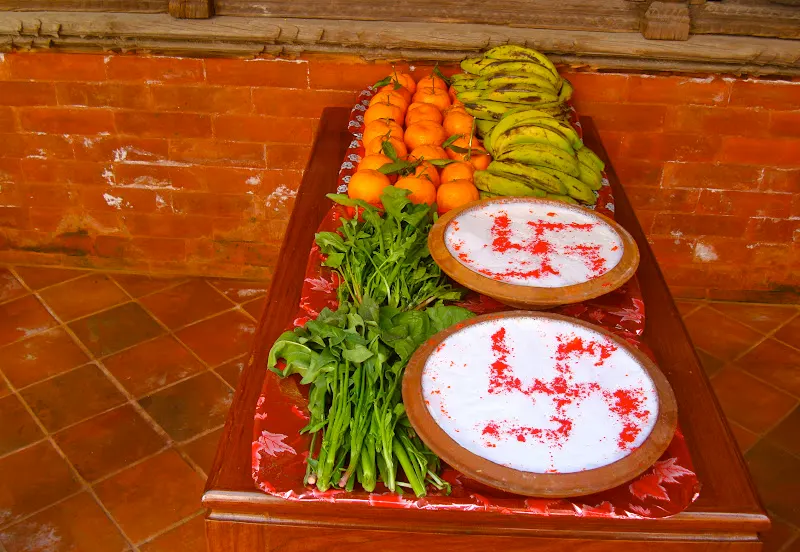
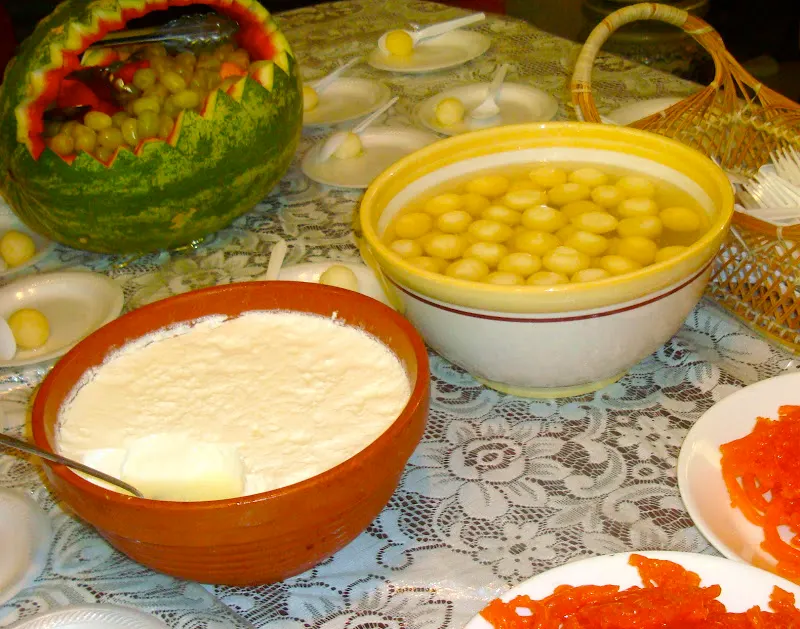
Yogurt is used not only for culinary purposes, but has deeply roots in Nepali cultural traditions, rituals, and religions. For example, yogurt is eaten to purify oneself during religious fasting days. It is also consumed as an auspicious blessed food, before departing from home. Many Nepalese believe that yogurt brings good luck, so a fresh container of yogurt is placed in the entrance ways for special occasions. In the above picture, yogurt is used during wedding ceremony.
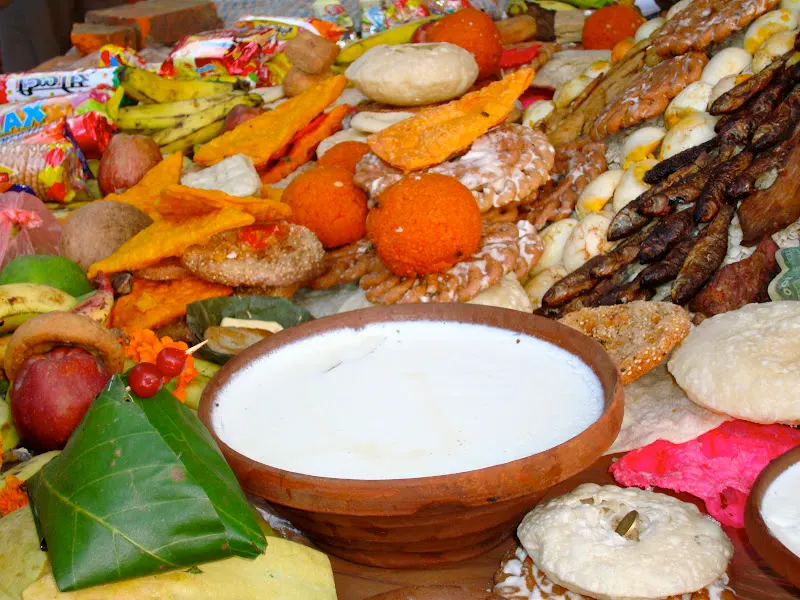
Juju Dhau is most essential part of festival food for Dashain, Tihar, Bhai-Tika, Mother's day and other special occasions. In the above picture, yogurt is offered to the deities during religious festivals. On auspicious occasions, yogurt is used to prepare a red paste (ashheta ko tika) applied on the forehead for family blessings.
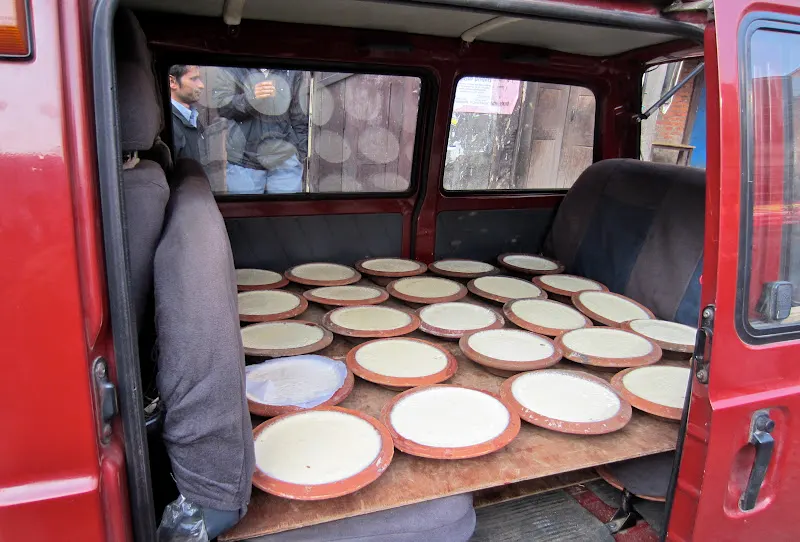
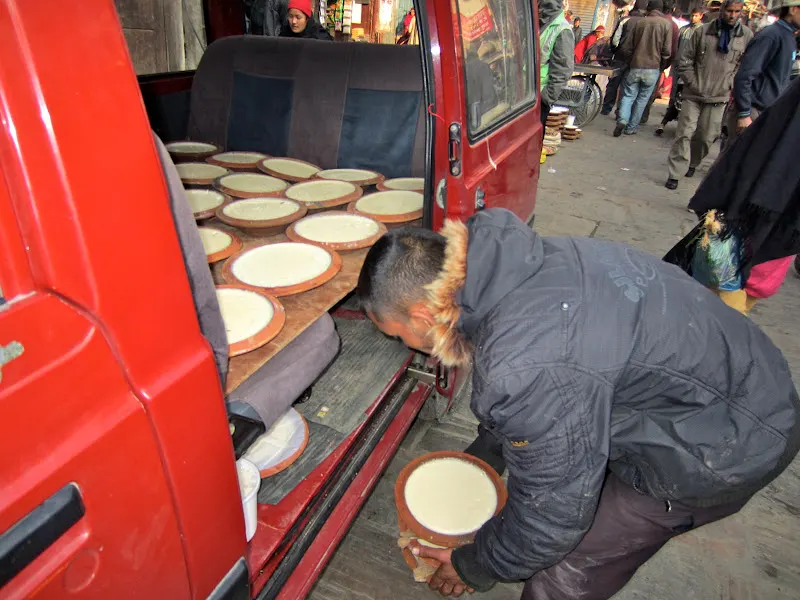
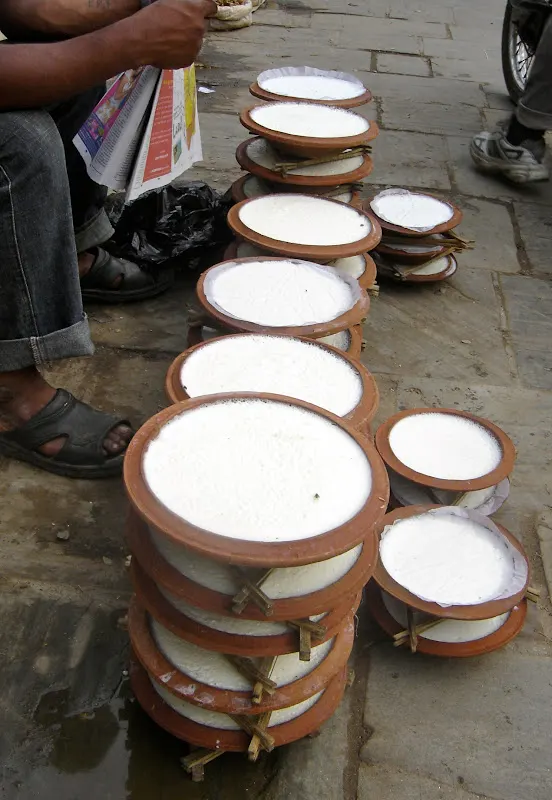
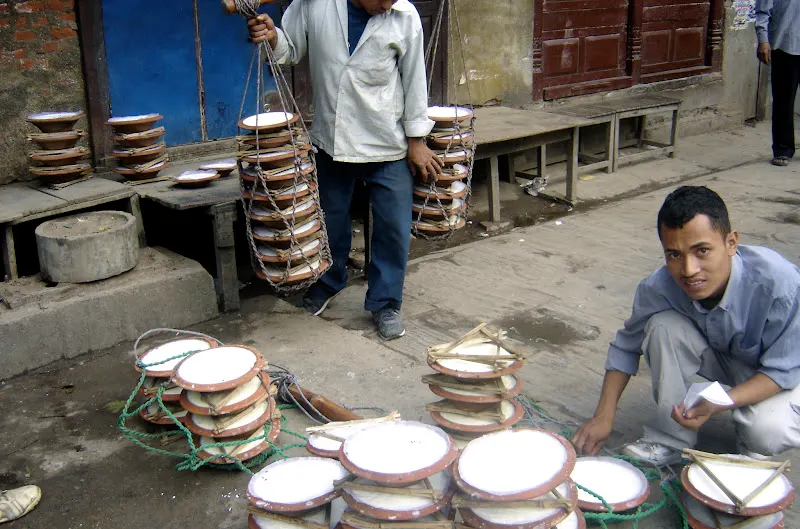
A man prepares his stacks of Juju Dhau containers, tied securely with braided bamboo cord to carry to a different location.
Copyright Information
All information on the Taste of Nepal blog are restricted use under copyright law. You may not re-use words, stories, photographs, or other posted material without the explicit written consent and proper credit to Jyoti Pathak. If you would like to use any materials here, please contact me.