2013 - Happy Nepali New Year! (Baisakh 1, 2070 B.S.)
Happy Nepali New Year! (Baisakh 1, 2070 B.S.)
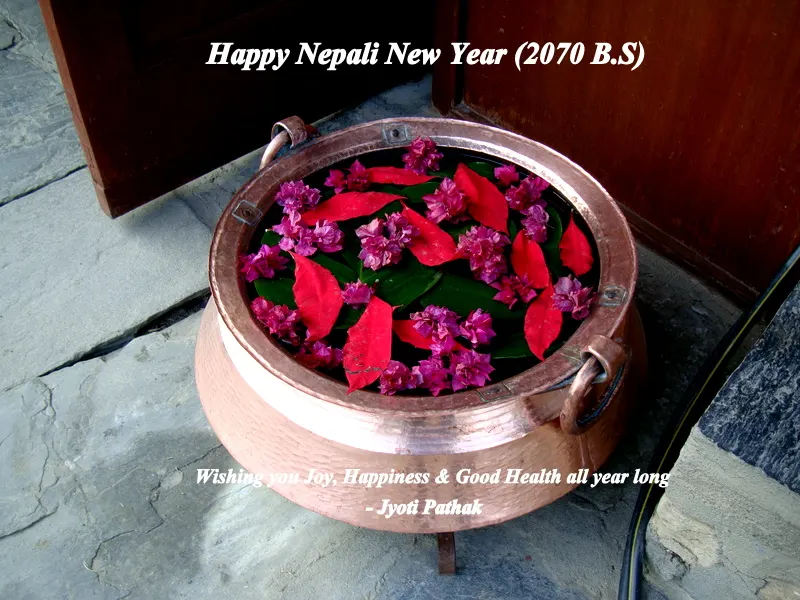
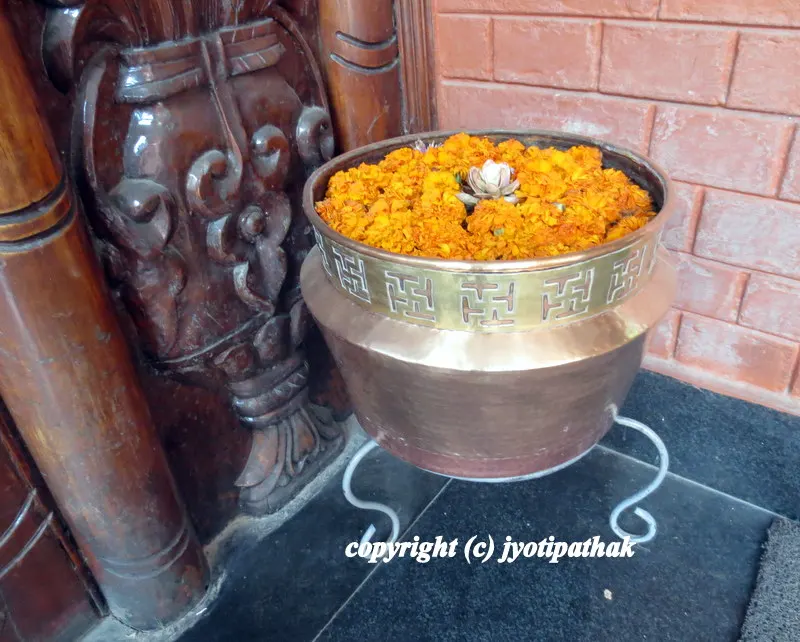
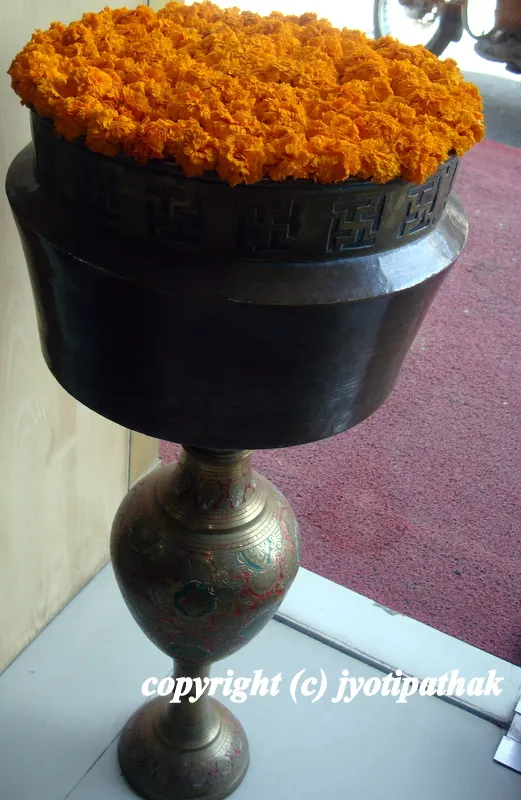
The color of peace, prosperity and happiness at the entrance of Nepali house
Wishing all my blog readers - A Happy Nepali New Year! Shubh Nav Varsha!(Baisakh 1, 2070 - bikram-sambat) – May Peace, Love and Prosperity follow you always and forever!
नव वष॔ २०७० को मंगलमय शुभकामना!
The Nepalese festivals are dated according to the traditional “religious” Lunar Calendar in the same sequence. An
exception is New Year's Day, which always falls in the middle of April,
observed throughout Nepal as the first day of the official Nepalese
solar Calendar, i.e., the first day of Baisakh. This day is an
official holiday for Nepal.
The most important New Year festival in
the Valley is held at Bhaktapur City, located fourteen kilometers east of Kathmandu. This festival is known as Bisket Jatra meaning the
festival after the death of the serpent. The main attraction of the
festival is the erection of the 'lingo', a ceremonial pole, a thick,
shorn tree-trunk some eighty feet in length. This is an exciting
operation since the pole, supported by bamboos and pulled by heavy
ropes, must be made to rest in the center... it's a source hole of a large
pile of cemented rocks. Large crowds from other town of the Valley
assemble to watch this festival. During the week Bhairav, Bhadrakaii
and other goddesses are dragged in chariots in the town. This is the
biggest festival of Bhaktapur. The new year of Birkram Sambat
is one of the many festivals of Nepal marked by parties, family
gathering, the exchange of good wishes and participation in rituals
to ensure good fortune in the coming year. Source - Kathmandu Metropolitan Page
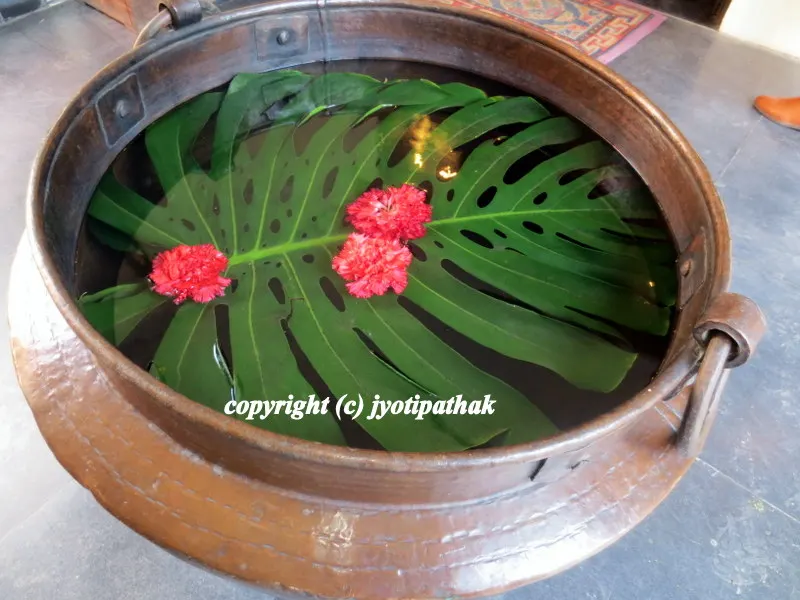
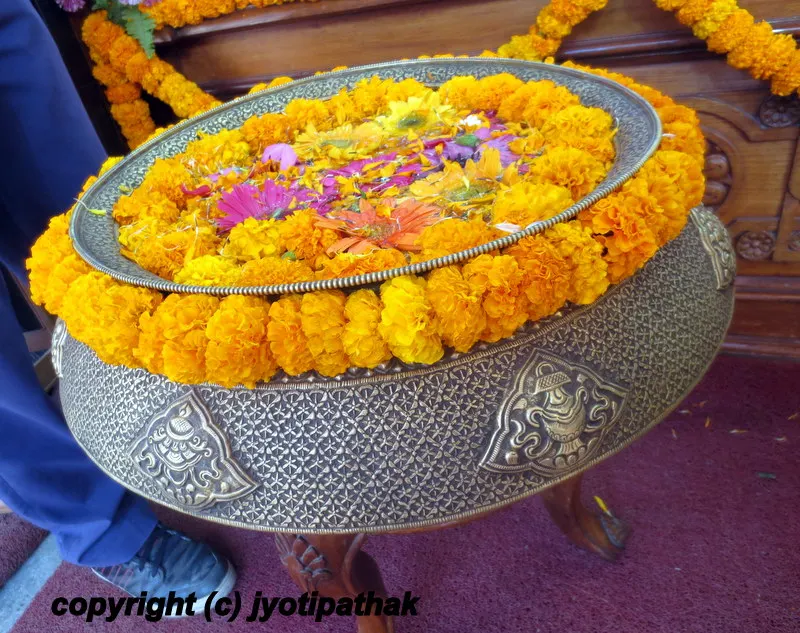
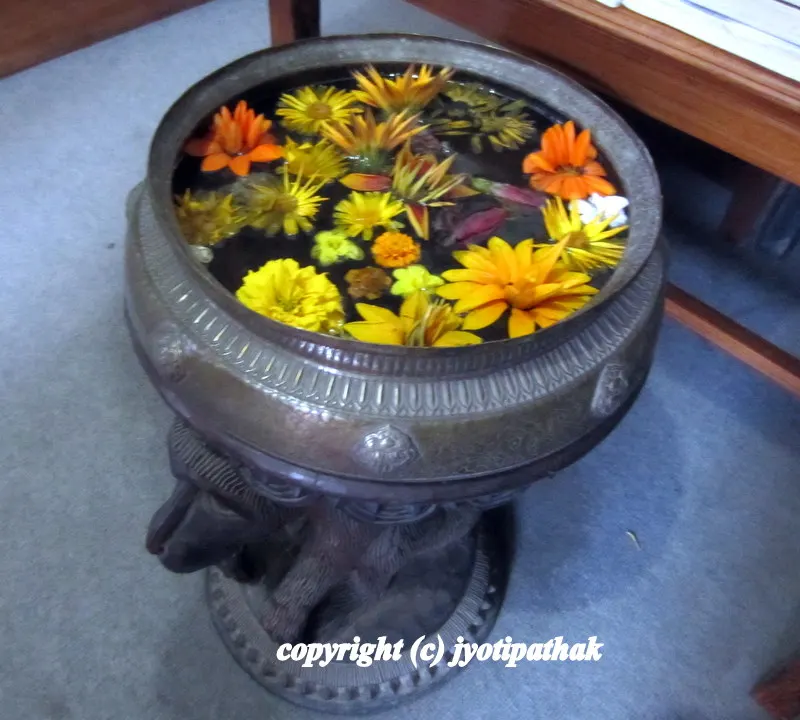
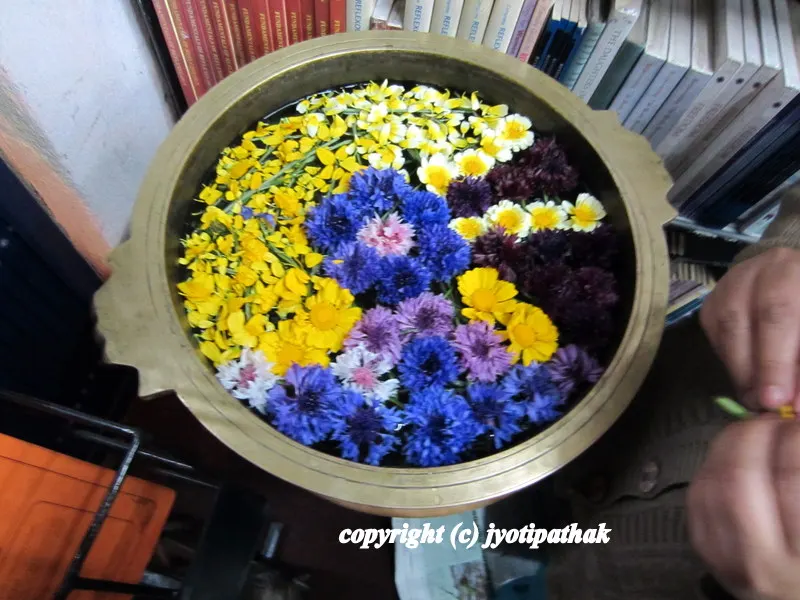
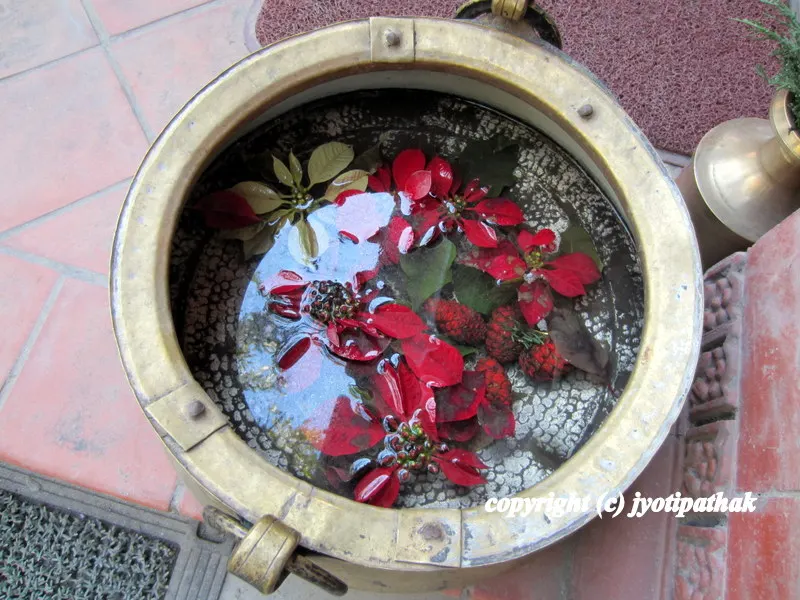
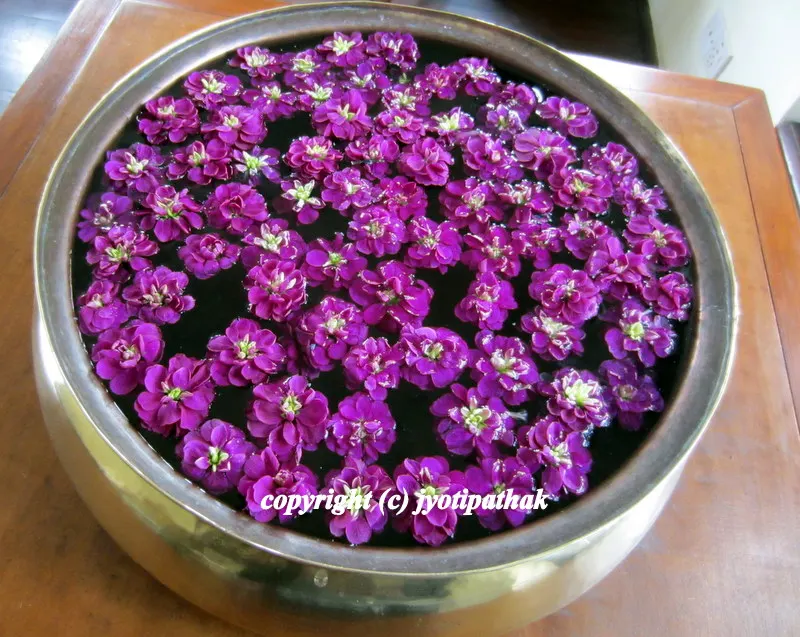
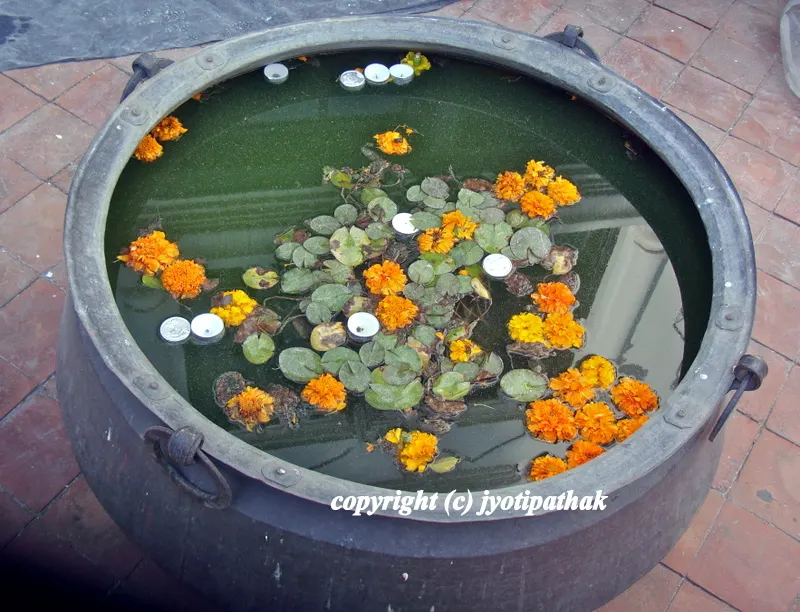
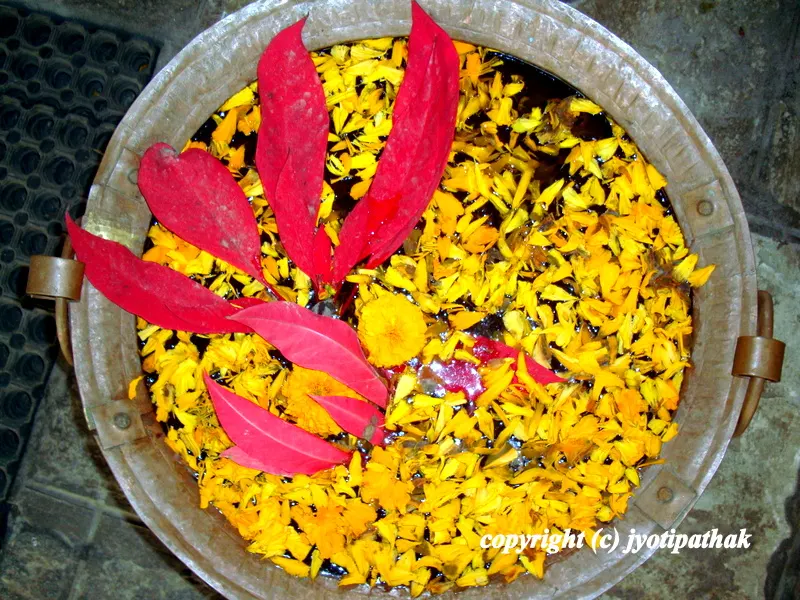
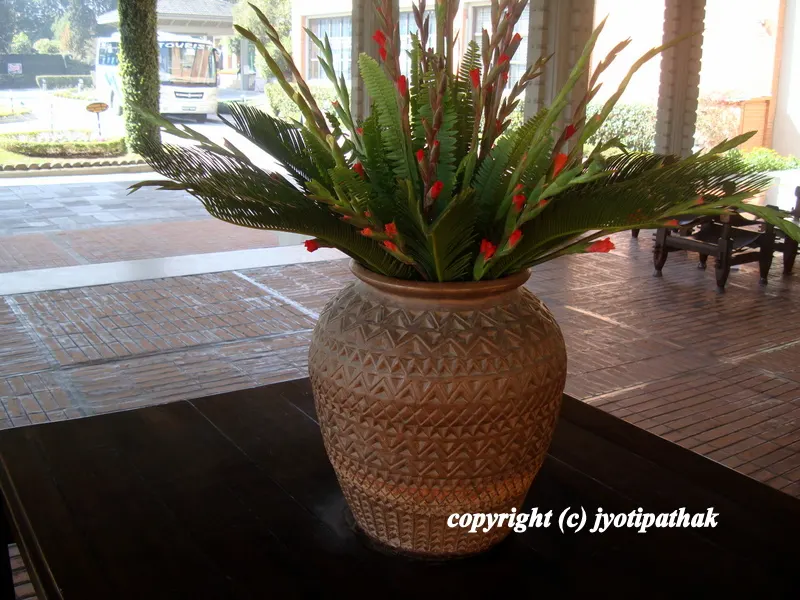
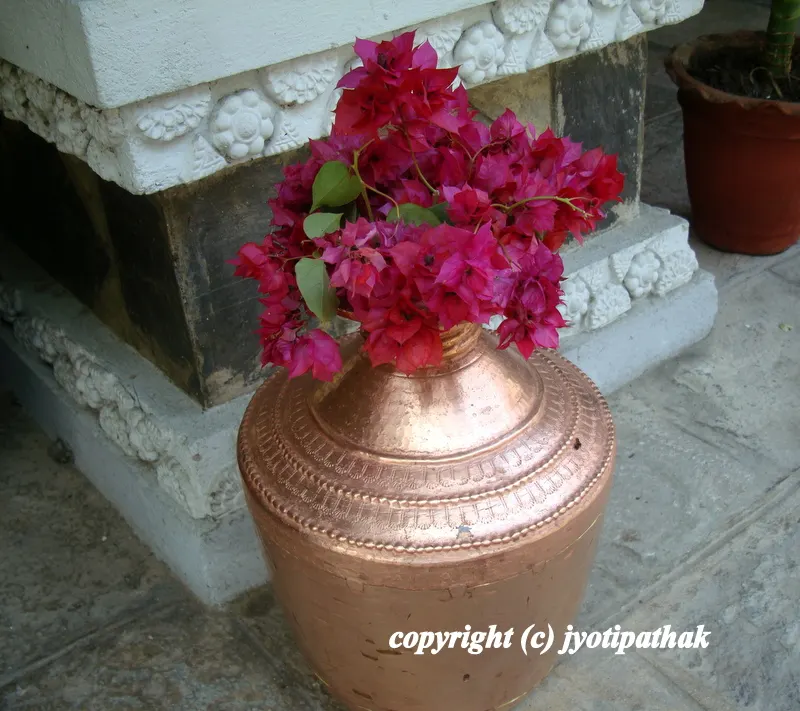
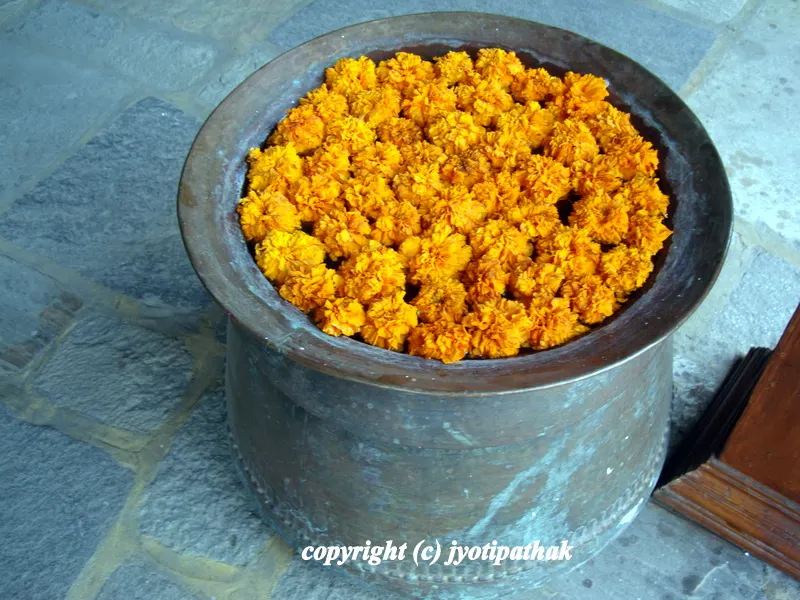
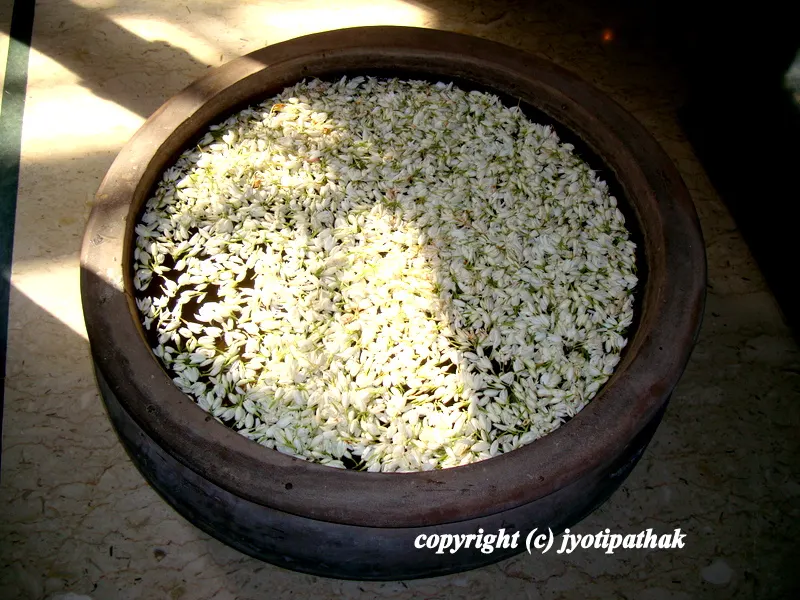
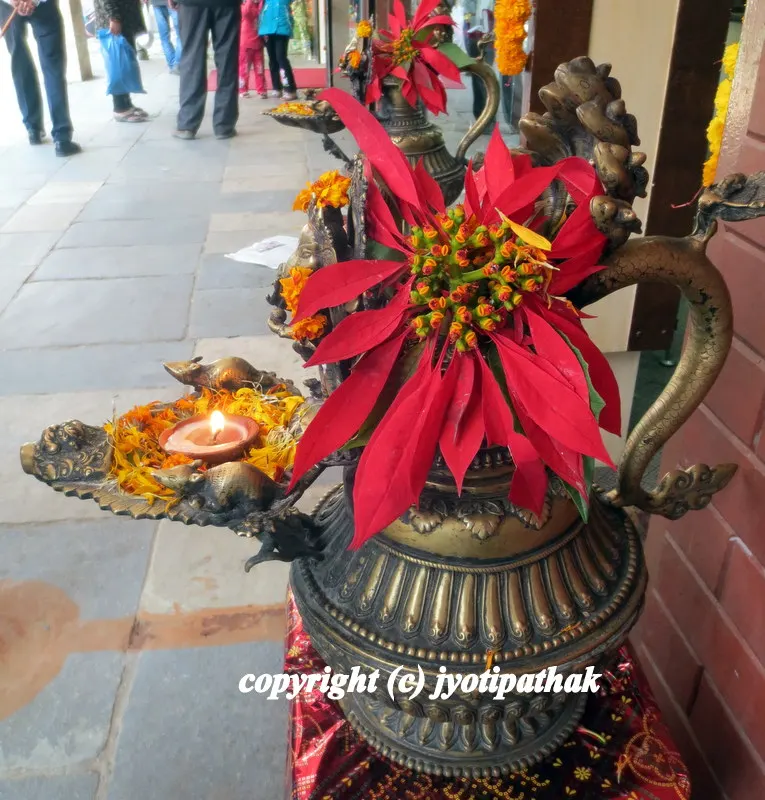
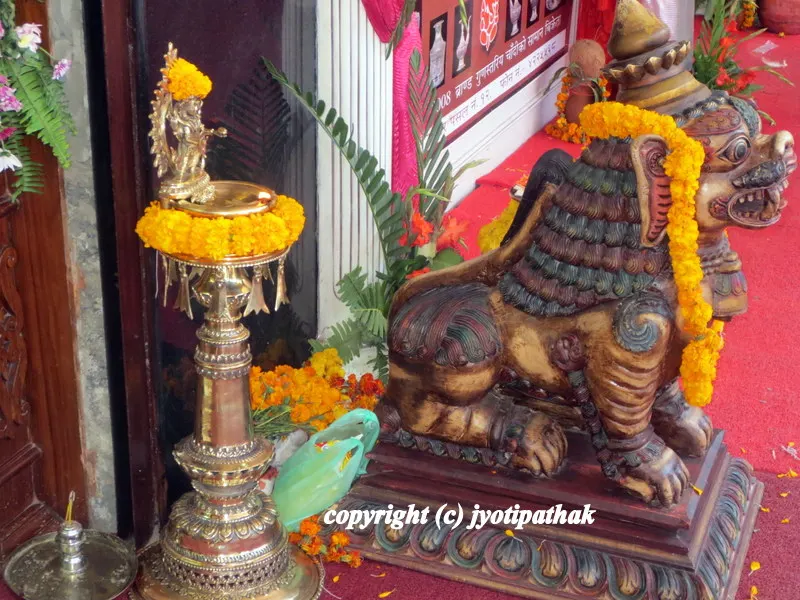
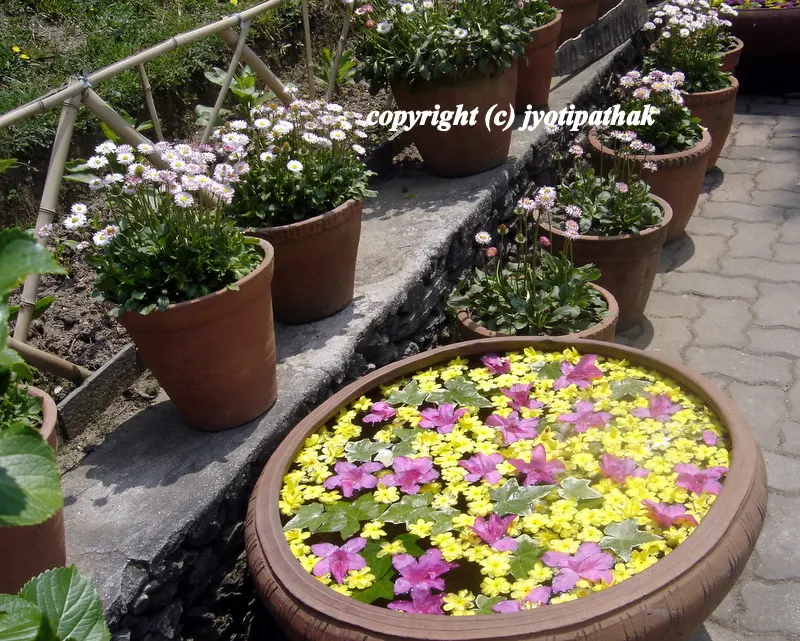
As we approach the Nepali New Year 2070 (bikram sambat), I would like to celebrate it by uploading images of several decorated floating flower containers placed doorways, walkways, pathways, and entrances of Nepali houses, restaurants, hotels, offices, banks and public buildings to welcome guests. It is a symbol of Nepali hospitality which we call it athiti satkaar. If you have visited Nepal or live in Nepal, you probably have seen many decorated antique brass or copper khadkalo (containers) with beautiful seasonal flowers floating in the water. Sometimes the decorated flower pot has several small floating candles or oil diyo that signifies welcome, good luck, happiness, enlightenment and healing. I have been capturing the images of these floating flower containers for a few years from different locations. I hope you will find each and every image unique.
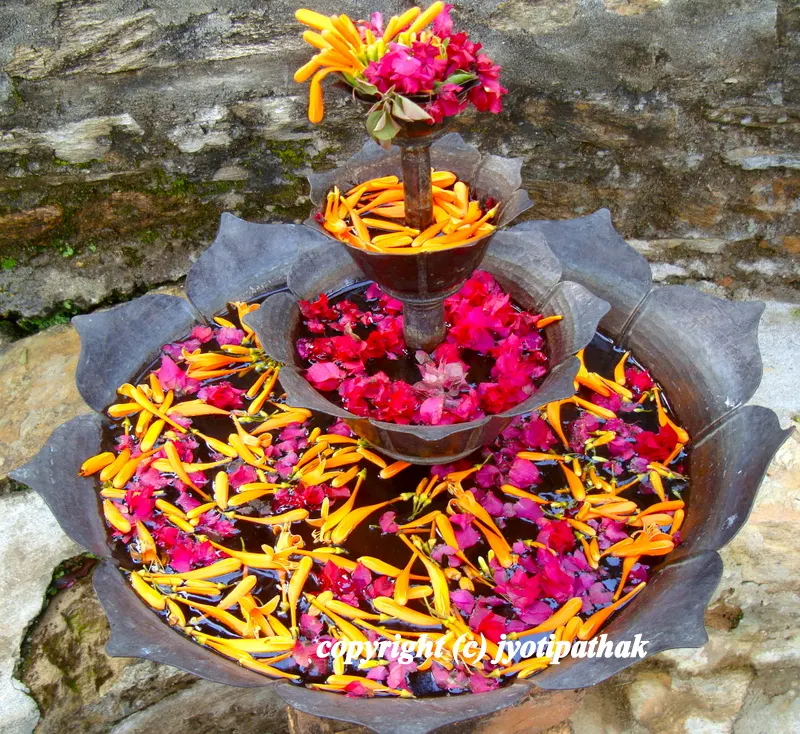
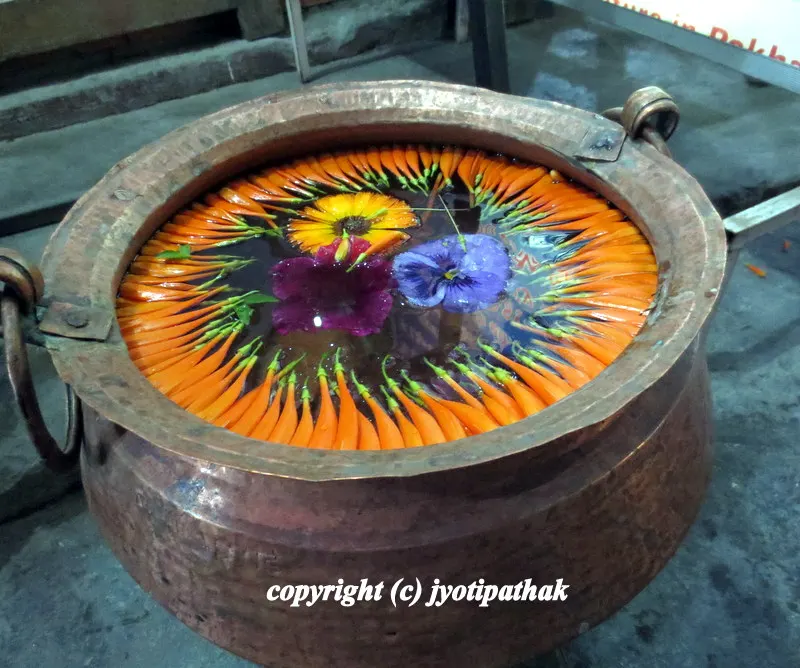
... the brass khadkalo pot (large copper or brass traditional pot used for religious purpose) planter displays elegant and exceptional floating flower arrangement. The attractive pansies flower is surrounded by flaming trumpet (winter-spring blooming flower).
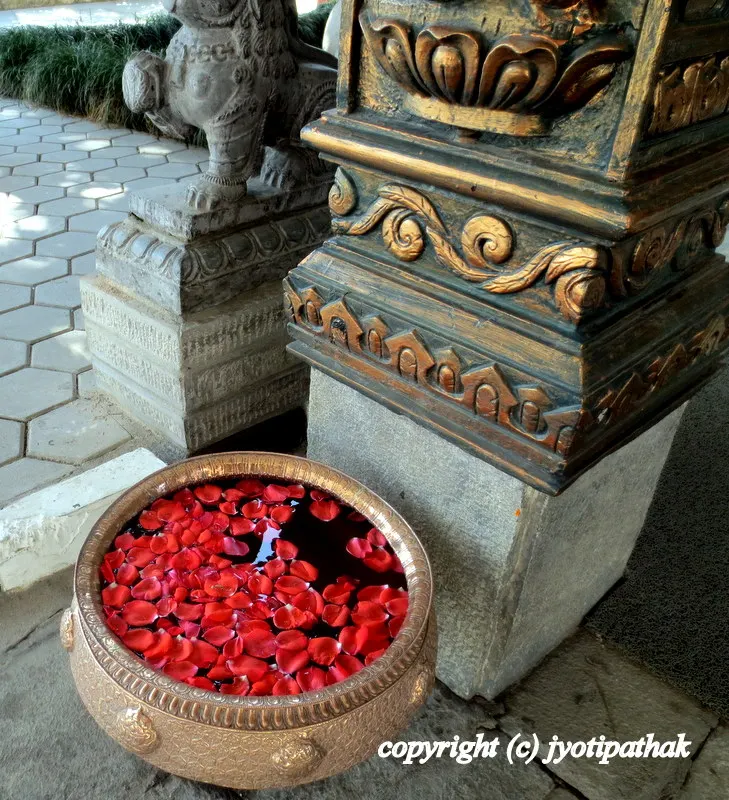
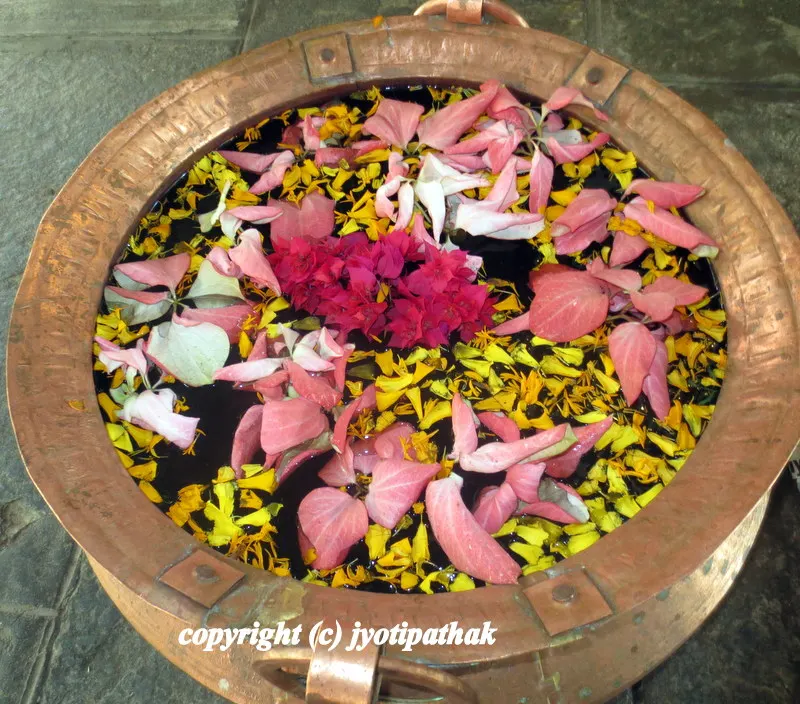
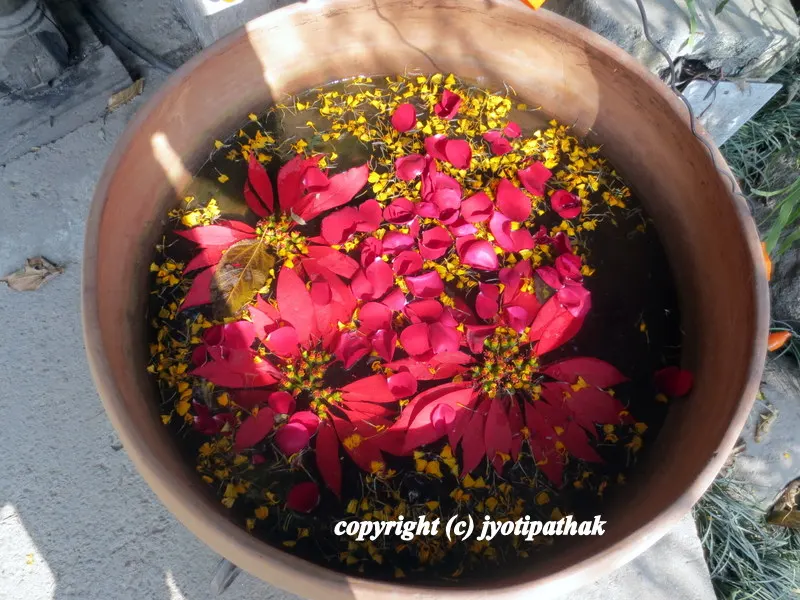
... walking through the stone paved streets of Kathmandu and spotting this beautiful display of floating flower pot - several deep red blossoms of Nepali variety of Poinsettias (lalpatte - came from tall tree), along with delightful petals of yellow Marigold flower.
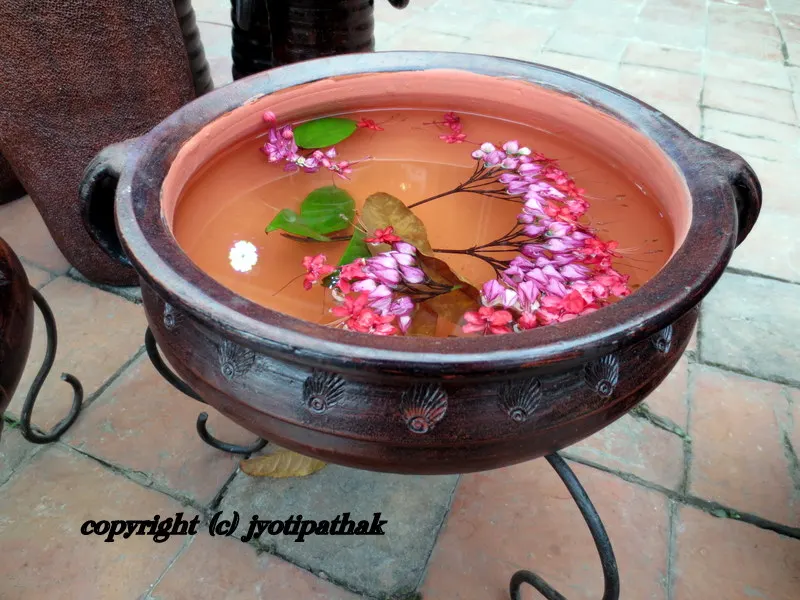
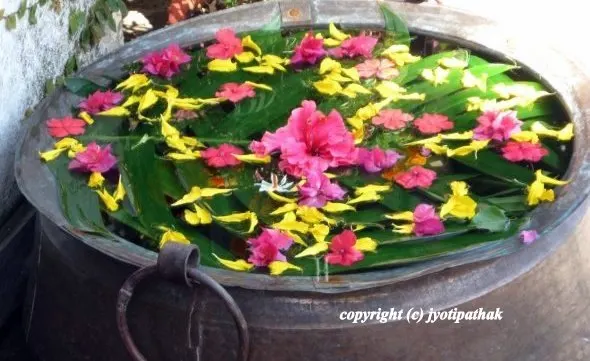
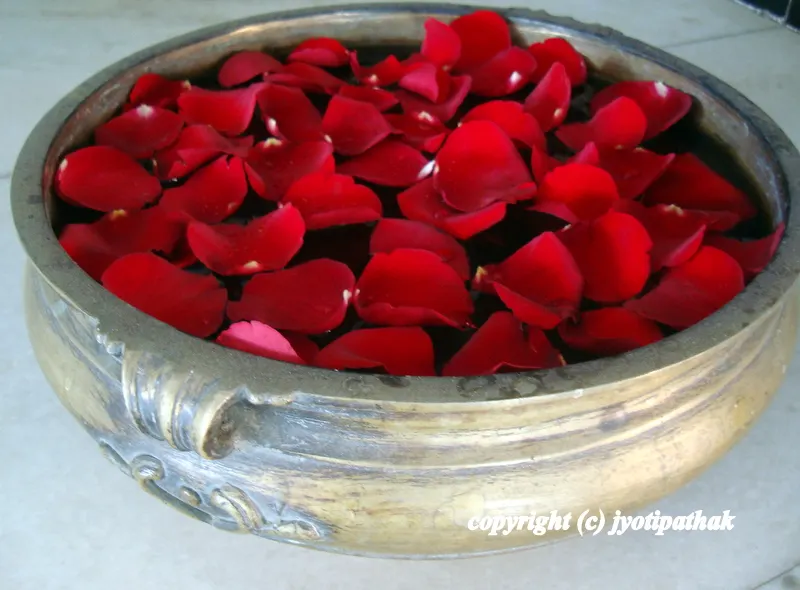
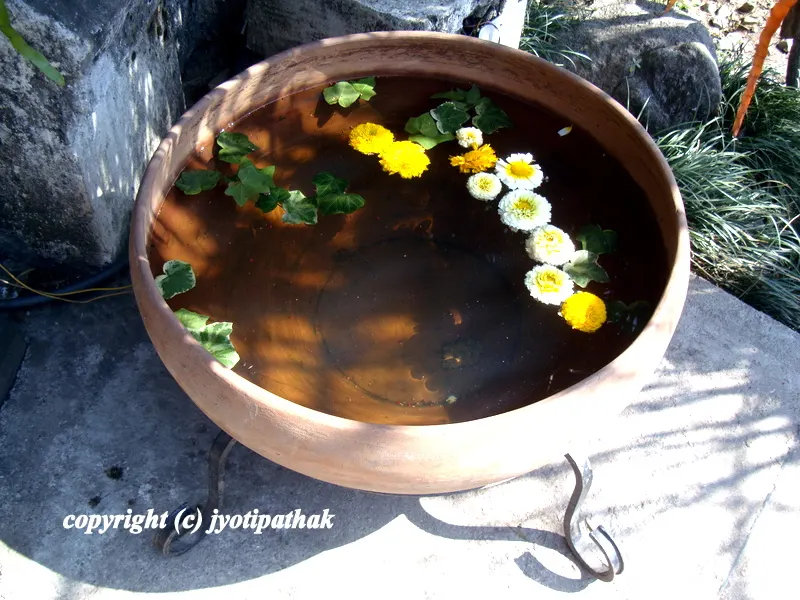
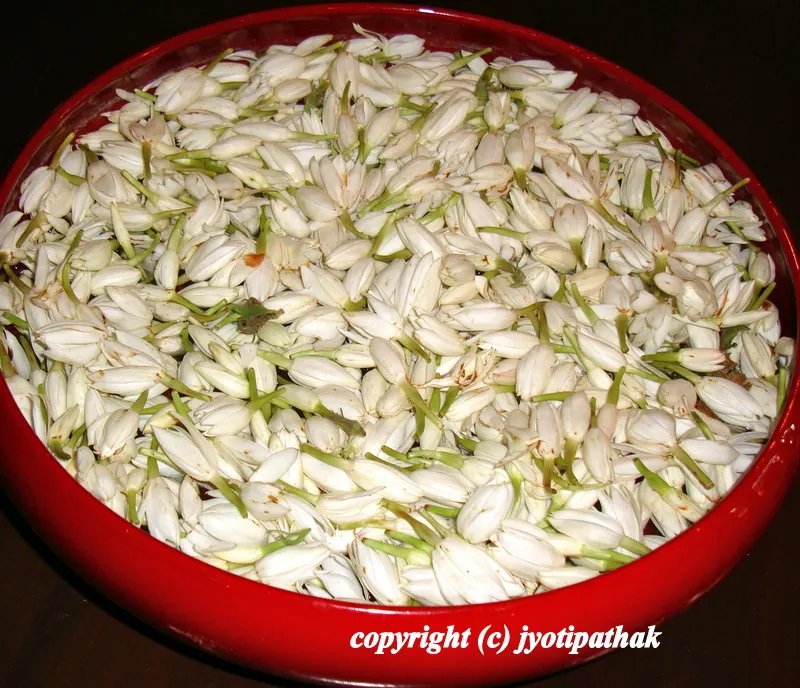
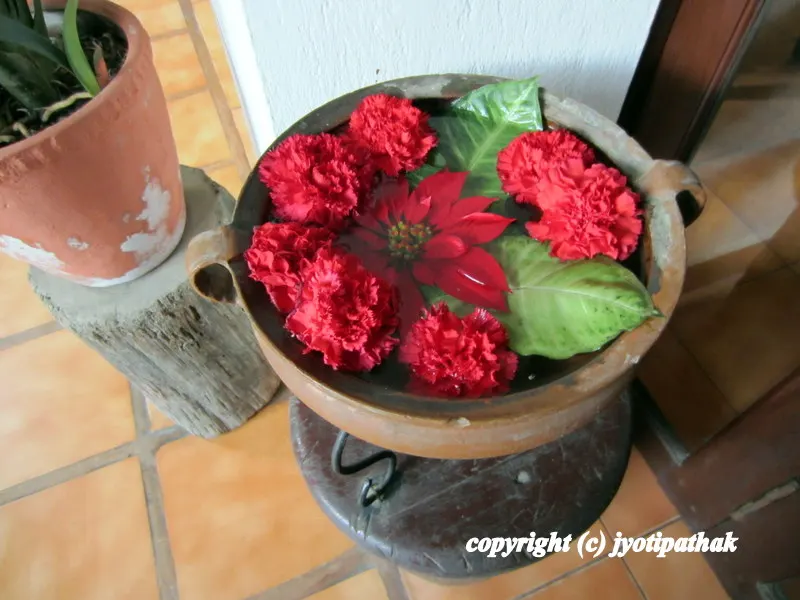
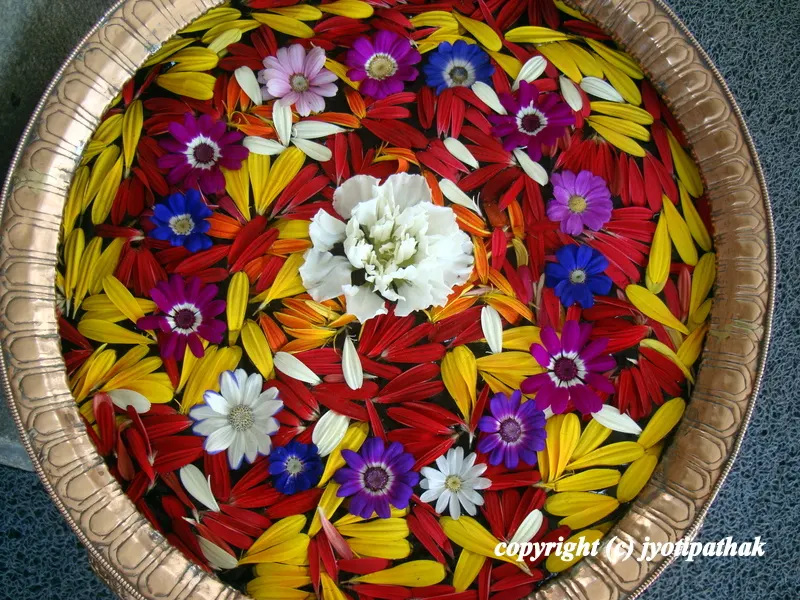
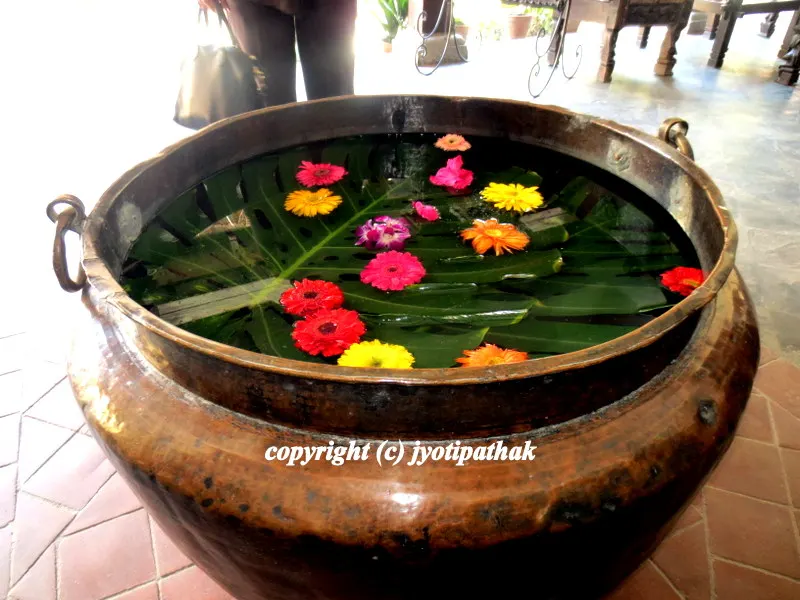
....this design really catches your eyes - the leaf has covered the entire pot and a few colorful flowers are floating on top - flowers that are light and flat are the best for floating in water. Heavy flowers will sink at the bottom after few hours.
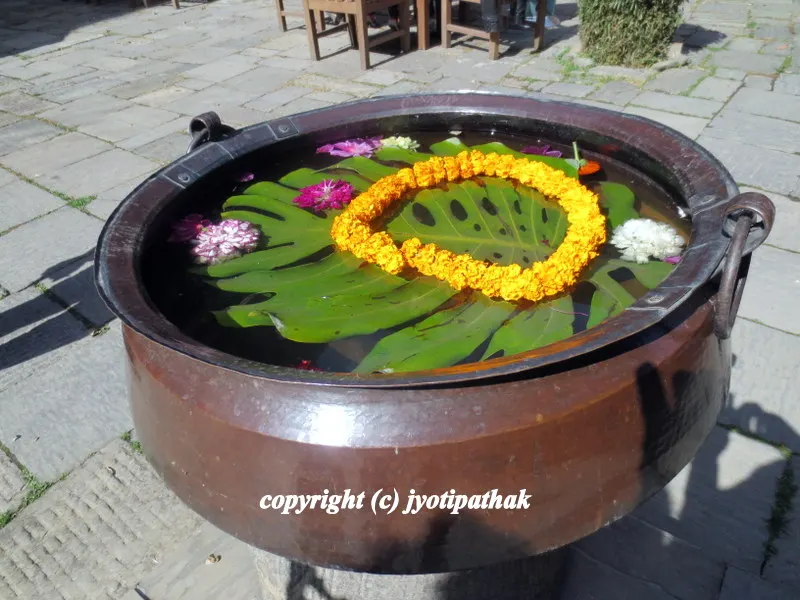
... this antique copper khadkalo pot displays marigold garland floating on top of a large green leaf ...these days, Nepali Khadkalos are the reproductions of authentic handcrafted ones. They were used since the ancient times for transporting and storing grains, for religious purpose, weddings, water storage and even cooking animals feeds.
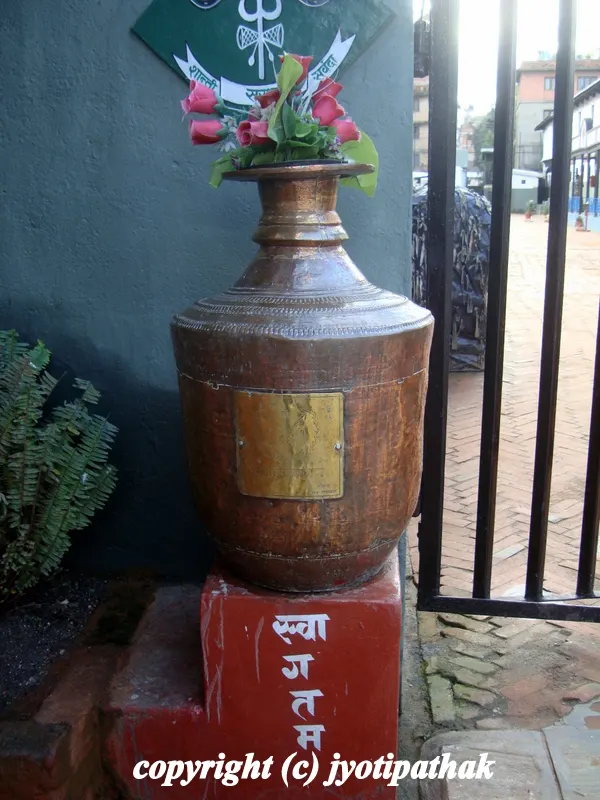
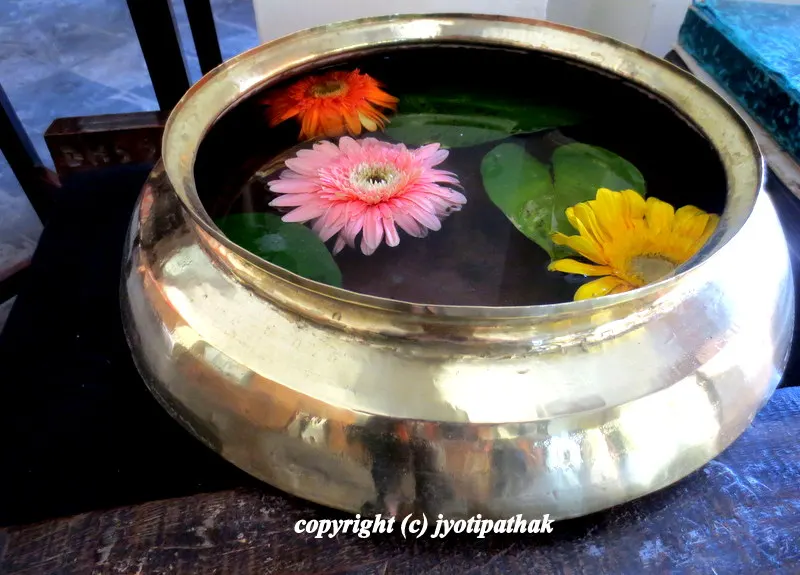
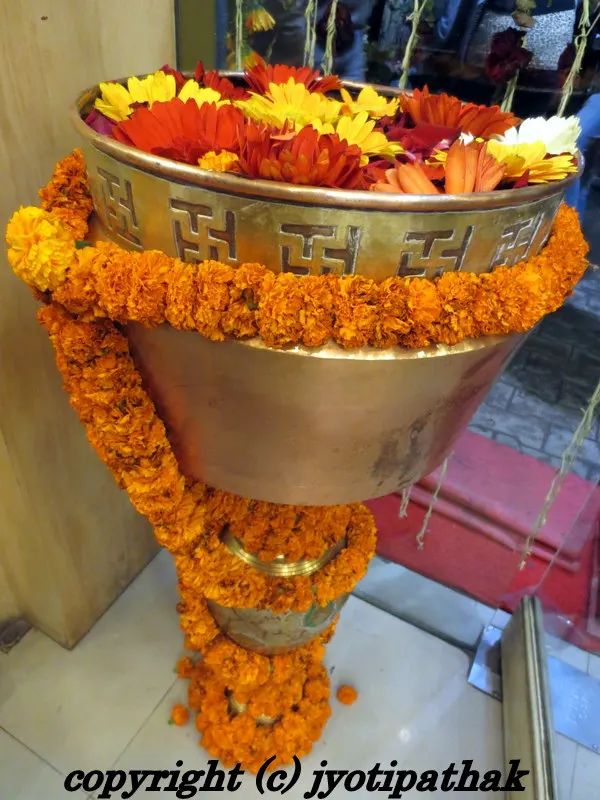
Sharing some of my favorite pictures (the next three) are captured during the festival of Dashain - is the longest and the most auspicious festival in the Nepalese annual calendar, celebrated by all Nepalese. It is not only the longest festival of the country but is also the one which is most anticipated. The festival falls around September–October, starting from the bright lunar fortnight and ending on the day of full moon.
Enjoy a safe and happy holiday. Naya Barshako Shubha-Kaamanaa!
Copyright Information
All information on the Taste of Nepal blog are restricted use under copyright law. You may not re-use words, stories, photographs, or other posted material without the explicit written consent and proper credit to Jyoti Pathak. If you would like to use any materials here, please contact me.