Nepali Dhindo - ढिडोँ - (Cornmeal Porridge)
Taste our Nepali Dhindo - ढिडोँ - Cornmeal, Millet or Buckwheat Porridge - (Makai, Kodo, Phaapar ko Pitho ko Dhindo)
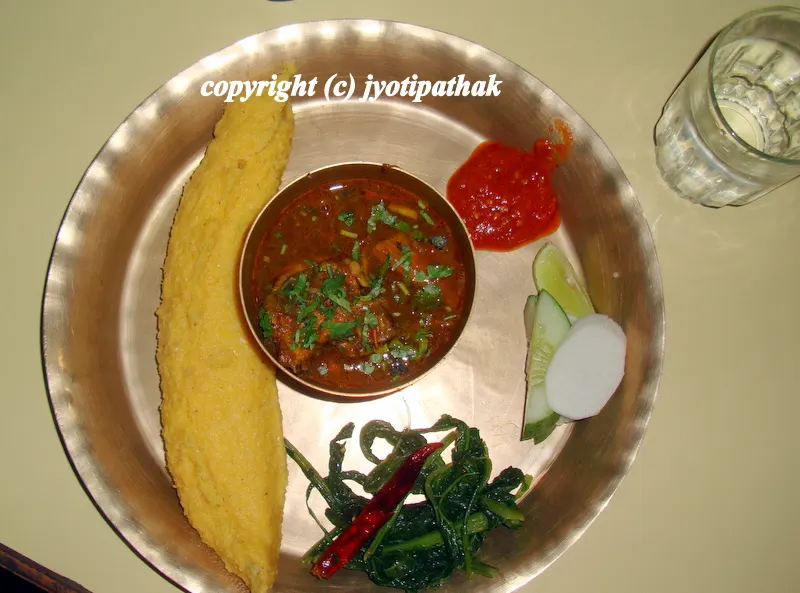
Dhindo or Dhido
(pronounced dhee-dough) sounds like some exotic dish from Nepal, but it is
simply a thick porridge or mush, made by cooking stone-ground
cornmeal (ghatta maa pidheko makai ko pitho), millet flour (kodo ko
pitho) or buckwheat flour (phaapar ko pitho) with salt and water.
Dhindo has been a staple food of
most rural and middle mountain-area people of Nepal, especially in
dry areas where rice or wheat corps are difficult to grow. This
hearty and filling dish is a nutrient powerhouse and is often eaten with a dab
of homemade butter or clarified butter (nauni, gheu), curried
vegetables (jhol tarkaari), or with various pickles, buttermilk or
yogurt. Gundruk-Dhindo is the most common combination served in
farming communities. Gundruk is a fermented and preserved
leafy vegetable that is used to prepare a soup like dish that is
known as gundruk ko jhol. Traditional dhindo meals are served on typical Nepali round plates called thaal made of stainless steel or
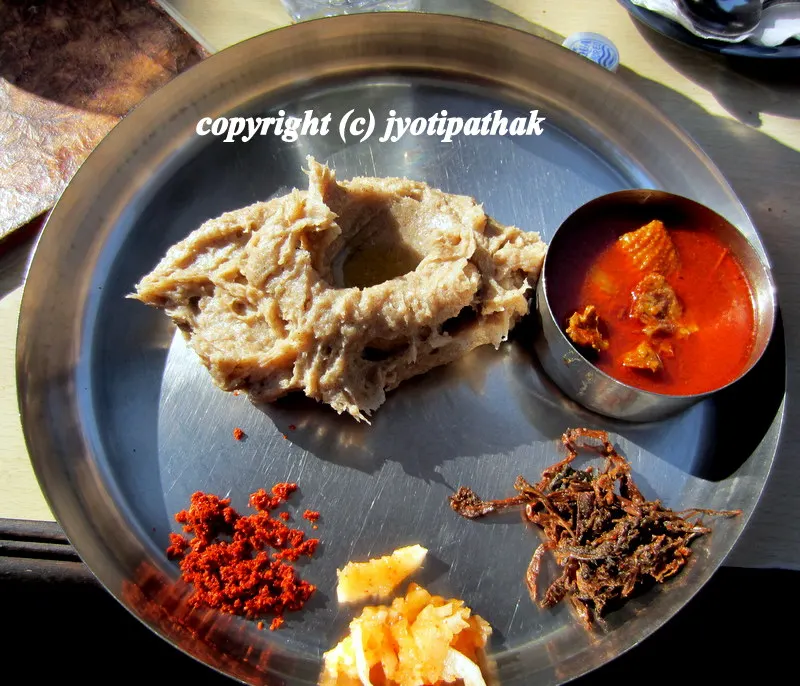
brass with small bowls. Nepalese people who do hard physical labor consume enormous amounts of this nutritious meal. It is very common to see a large mounds of
Dindo served in the middle of thaal accompanied by side
dishes in small portions. It is eaten with the right hand by first
scooping up or tearing small bite-size pieces of dhindo with your
fingers, then dipping or rolling into the sauce before you put in
your mouth. It is a Nepali tradition to always wash hands prior to
eating and after the meal. Dhindo should be eaten steaming hot, right
after cooking since it hardens once it cools.
Traditionally dhindo is cooked
in a Nepali iron pan with long handle and rounded bottom, called a
taapke, which has an excellent heat distribution qualities. It is
typically stirred with a large iron spoon with a long handle (panyu).
As a humble origin, Dhindo meal were rarely found in
fancy Nepali restaurants of Kathmandu, but these days, in many modest
neighborhood restaurants, dhido is being introduced as most authentic and traditional
Nepali meal.
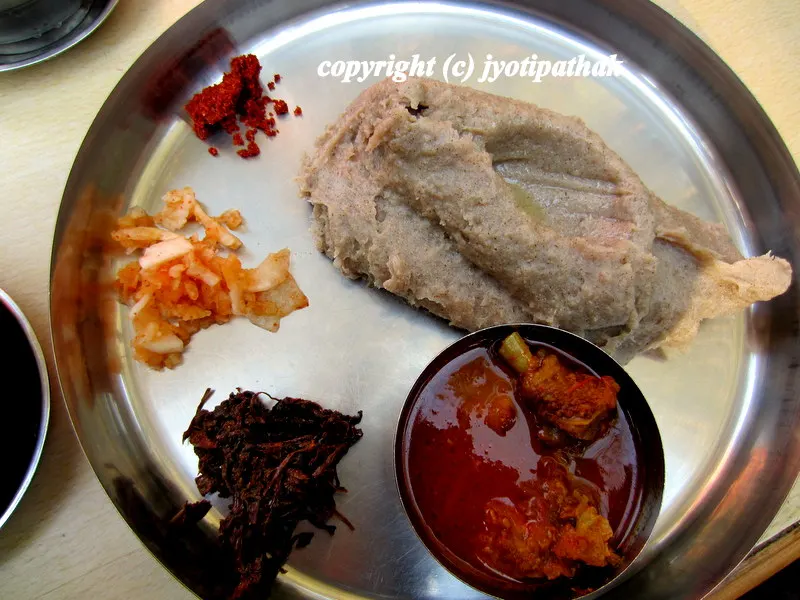
A very flavorful and healthy meal from rural part of Nepal and the dhindo is made out of millet flour (kodo ko pitho). Served with dhindo is rich and flavorful chicken curry cooked with ginger-garlic and fresh green chilies, salad-like gundruk dish (saadheko gundruk), tiny bits of red chili sauce, and sauteed onions. For someone with simple tastes, nothing could be more satisfying than kodo ko dhindo.
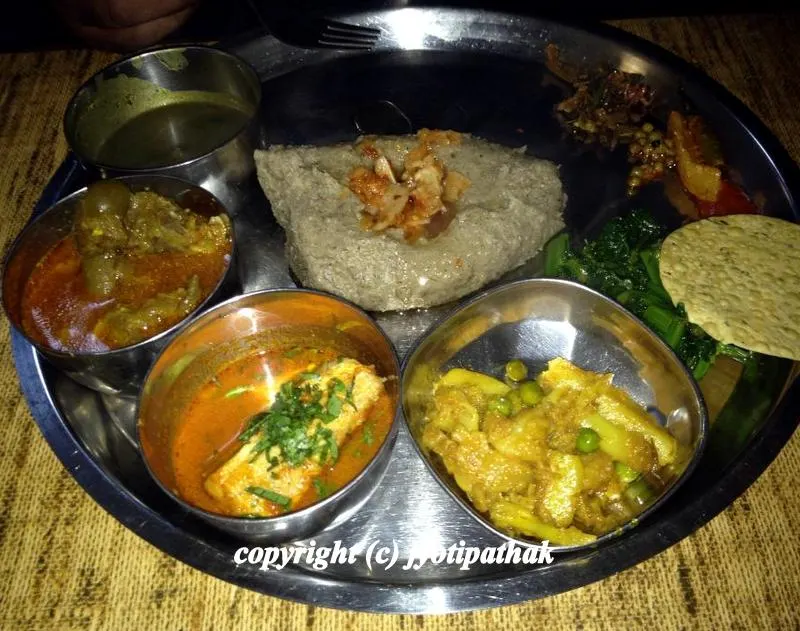
Another steaming dhindo dish prepared with buckwheat flour (phaapar ko pitho). It is served with a flavorful array of side dishes in small bowls (kachura). They include starting from the back to the front: black gram daal (jhaaneko kaalo maas ko daal), goat curry (khasi ko ledo), fish curry (maachaa ko jhol), cauliflower & peas vegetable (kauli re kerau ko tarkaari), mustard greens (rayo ko saag), and pickled radish. The warm clarified butter (ghue) is lightly browned with chopped garlic before pouring in the prepared dhindo to give an extra flavor.
Photo courtesy - Poonam Shah Gautam
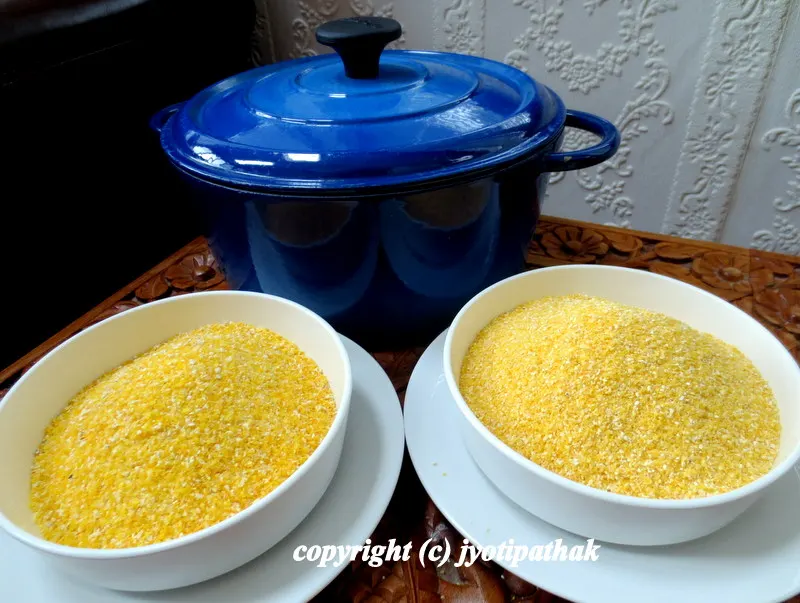
... Coarsely ground cornmeal on the left is preferable to finely ground cornmeal on the right. The Nepalese corn flour is much finer called Makai ko Pitho compared to cornmeal available here, which is a little coarse and grainy. The following dhindo is prepared from Bob's Red Mill Organic Polenta, Corn Grits
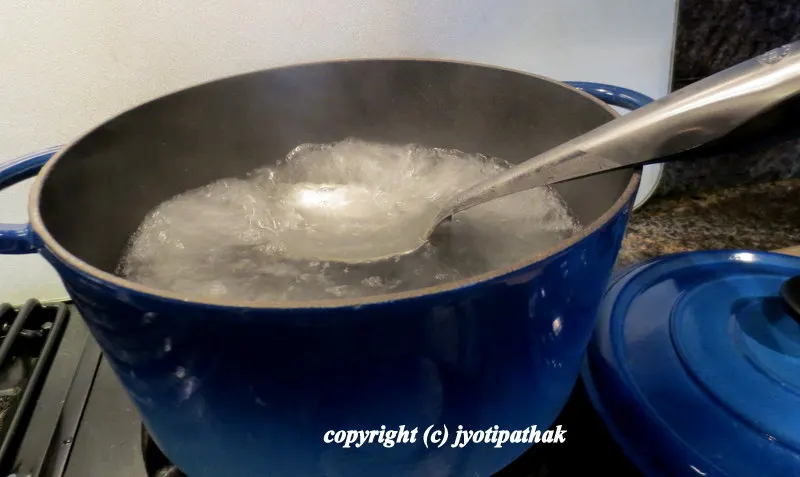
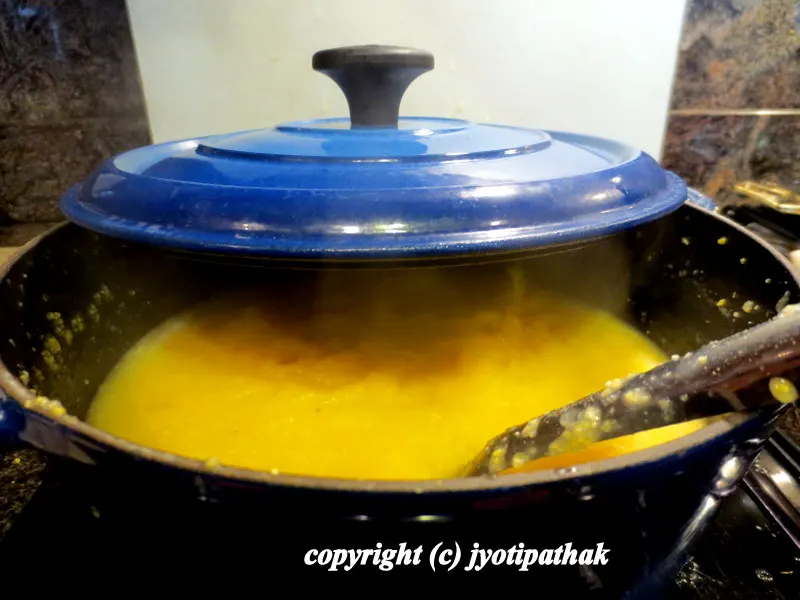
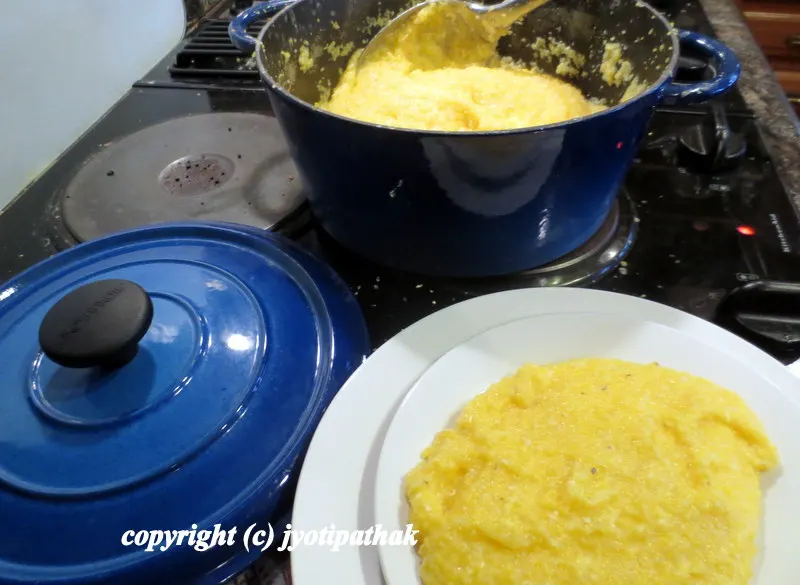
... my basic cooking procedure for making authentic dhindo - 4 cups of water plus some more, if needed, 1/2 teaspoon salt, or to taste, 1 cup cornmeal (coarse or medium-ground), 2 tablespoons clarified butter (gheu)...
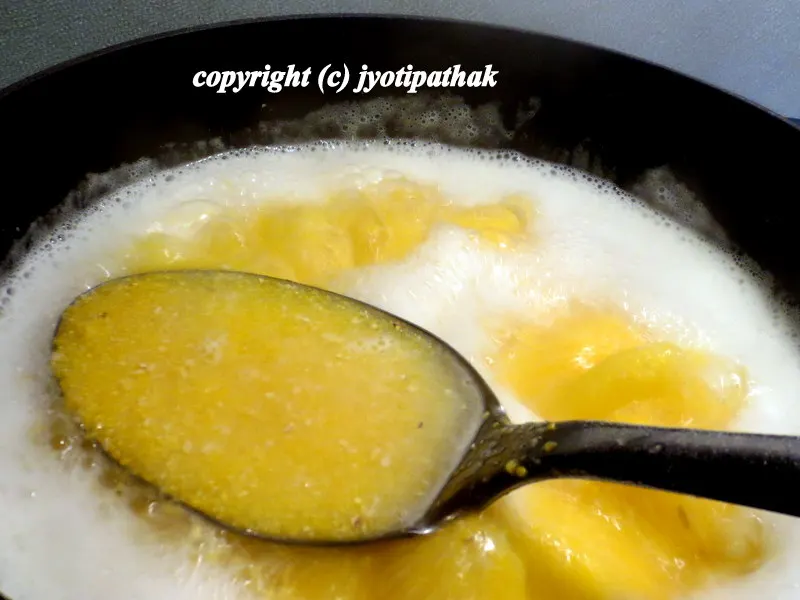
Here is my simple and basic step-by-step method of cooking corn flour dhindo.
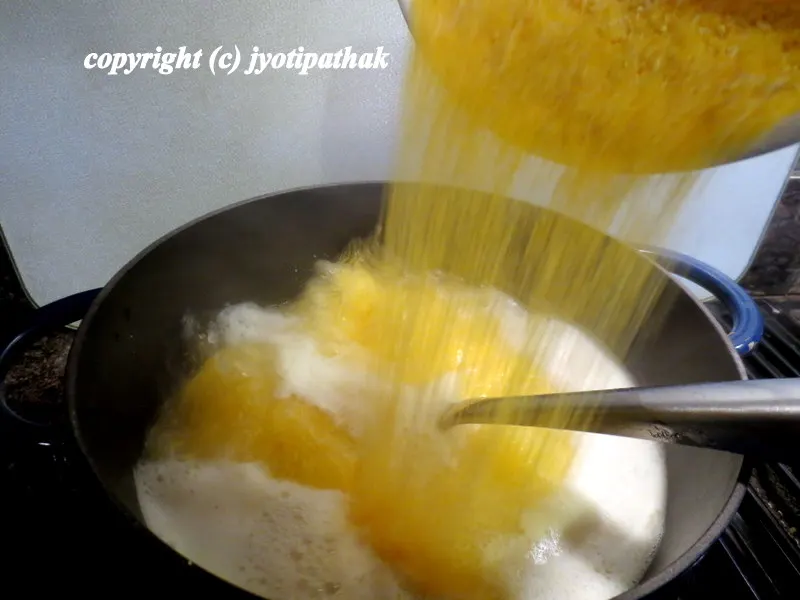
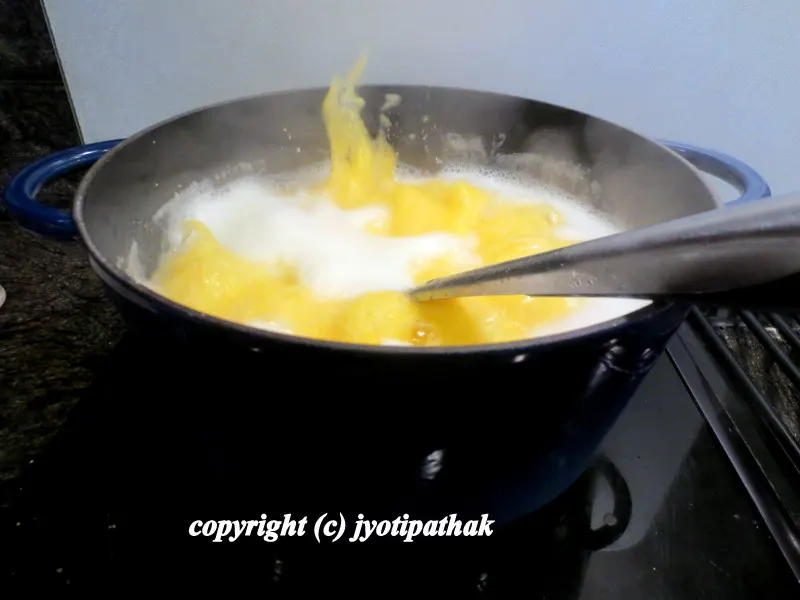
Mix well until well-combined, making sure there are no lumps in the mix. Constant stirring will avoid any lumps. This process is called बेस्करी ढिडोँ मस्काउने(beskari dhindo maskaaune) in local terms, means vigorously stirring and turning the thickening mixture.
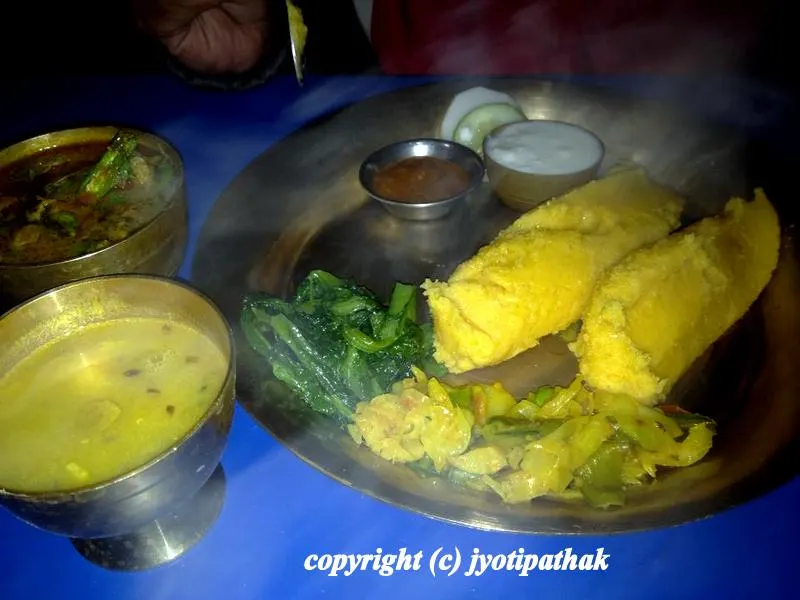
Taste our traditional Nepali dhindo set - a perfect introduction of Nepali cuisine - corn flour dhindo (makai ko dhindo) served with (far left in a bowl) chicken with gravy (kukhuraa ko maasu ko suruwaa) - featuring local chicken raised in the farm, and (front) - sprouted 8-bean soup (kwanti) in a bowl. In the brass thaal served with the steaming dhindo - tender mustard greens (raayo ko saag), stir-fried cabbage (banda-govi ko tarkaari), plain yogurt, fiery tomato chutney (piro golbheda ko achar) and few slices of cucumber and daikon radish. When it comes to Nepali food, you will have to say good bye to your fork and spoon. Be authentic and use your right hand to enjoy the meal.
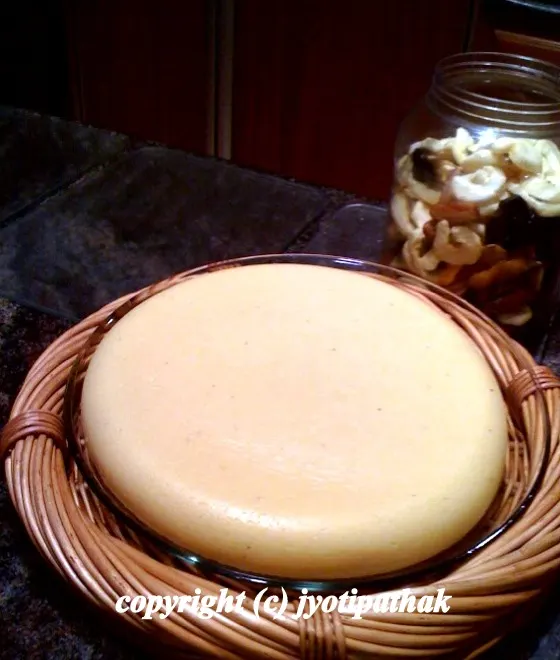
From my daughter's kitchen - if you have a lot of leftover dhindo, pour the remaining mush into a plate and smooth it out. If you allow the dhindo to set, it will start to thicken and solidify. You can cut into square or rectangular pieces, then fry in butter, or top with cheese, or add any other flavorings or sauce and serve.
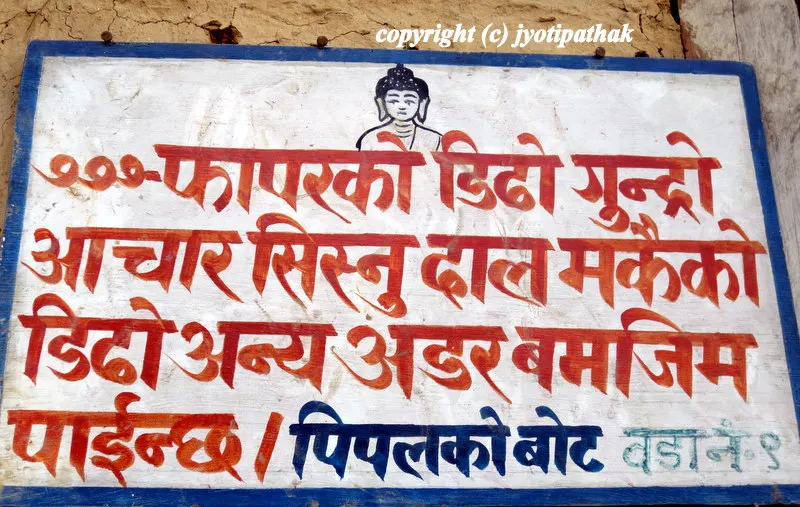
Capturing the image of food sign (hand-written) - on the road between Namobuddha Monastry and Dhulikhel, Nepal - Featured on the Menu are offering of home-made Nepali authentic food made to order - Buckwheat Dhindo, Gundruk pickle, Nettle greens, Daal, Cornmeal Dhindo - will make according to order - Bada No. 9, Pipal ko Bot area - I wanted to check out this place and peeked inside the small house across the road. I found a small village kitchen with wood-burning clay stove (chulo), empty pantry with no owner or customers.
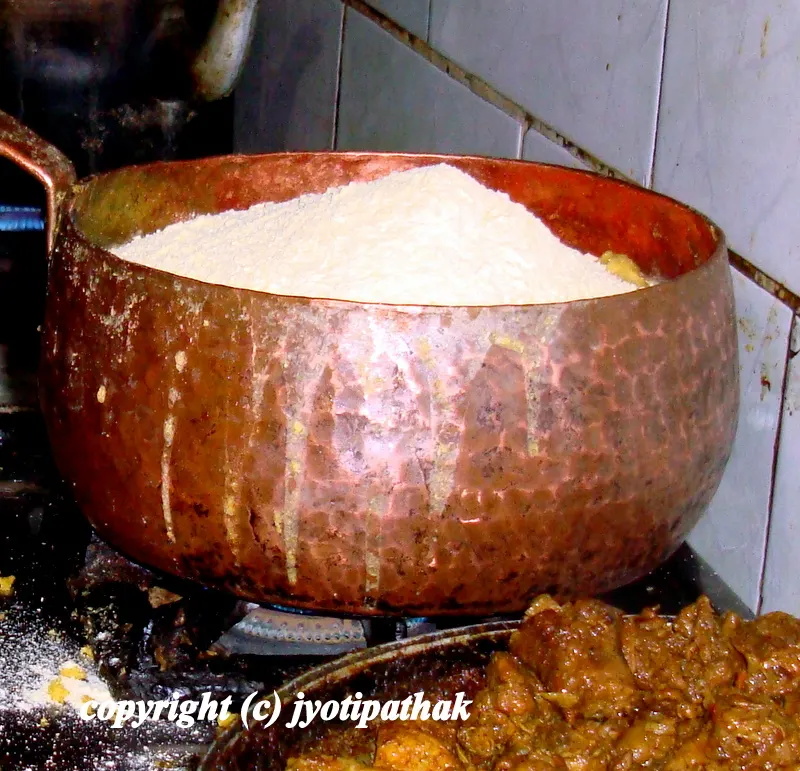
Tasting regional flavor of dhindo in the local restaurant called "Pate Dhido" - The kitchen staff starts preparing dhindo immediately after they receive the order from you. I smelled the dhindo being cooked in their kitchen from my table only few feet away. I quickly got up and requested the cook to let me watch his method. It was being cooked in a centuries-year-old way by using a copper pot and a wooden spoon.
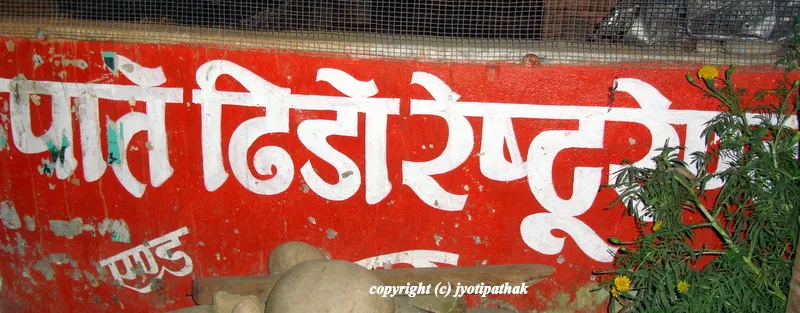
If you are looking for an authentic dhindo meal place outside Kathmandu, head to this place called "Pate Dhindo" restaurant, Thumsi - a popular stop for the passing travelers, located near the busy neighborhood of Narayan Ghat-Bharatpur-Chitwan area. Don't be fooled by the rugged exterior of this place, the sign is all faded and needs to refinish but the inside is clean and welcoming.
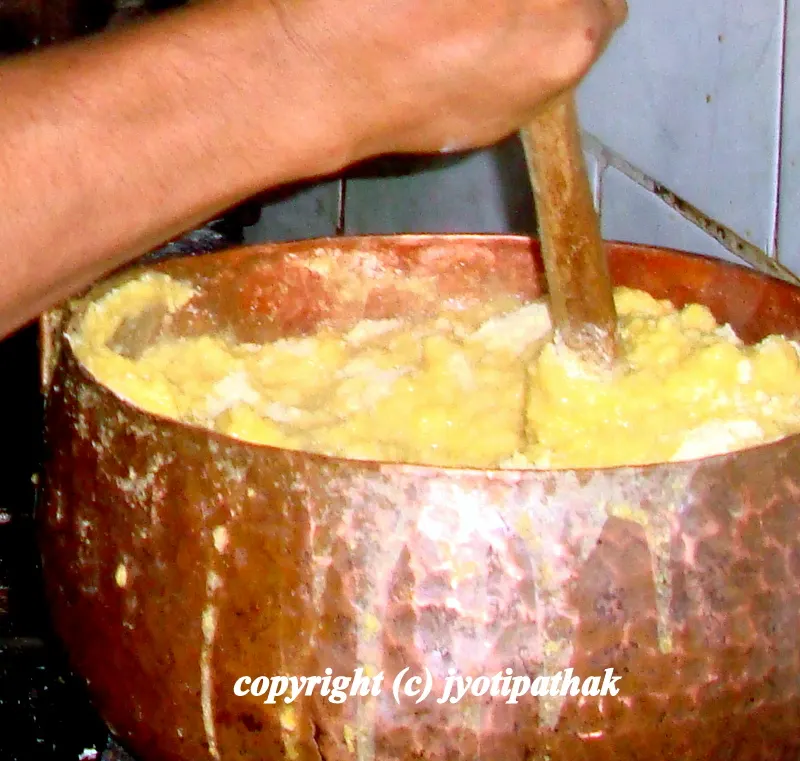
After vigorous stirring the mixture in the copper pot, the fatfatee cook (chatterbox-फतफते) looked at me and told me, "look you can't avoid the messy splatters when you are stirring the mixture (ढिडोँ लाई मस्काउदा). The buckwheat and the millet dhindo is also pretty much cooked the same way except the color of the finished dish will be a little different. The taste of dhindo is usually bland, so it is always eaten with spicy liquids.....oops..the dhindo is ready now"... and he poured the steaming mush in a brass plate.
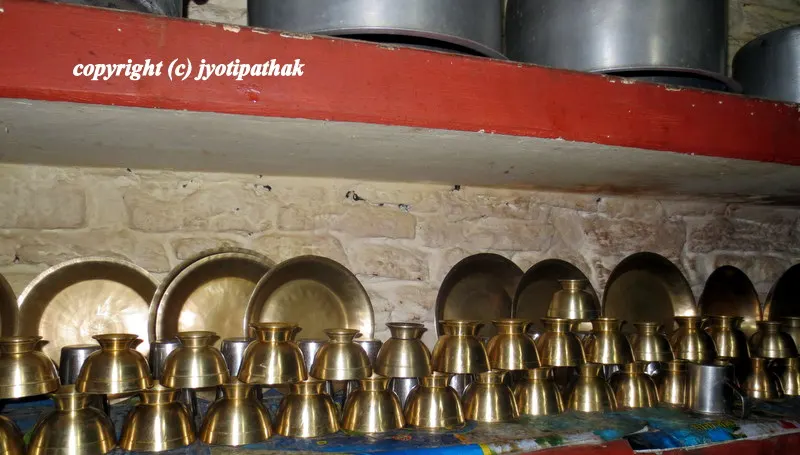
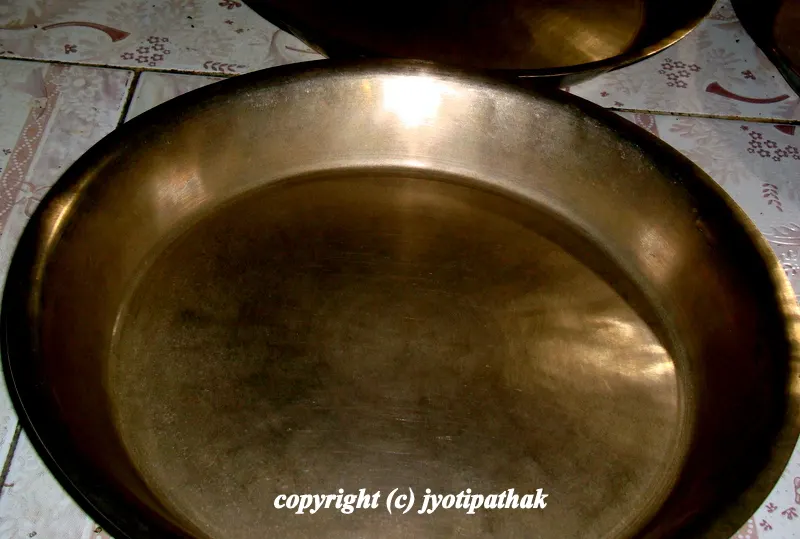
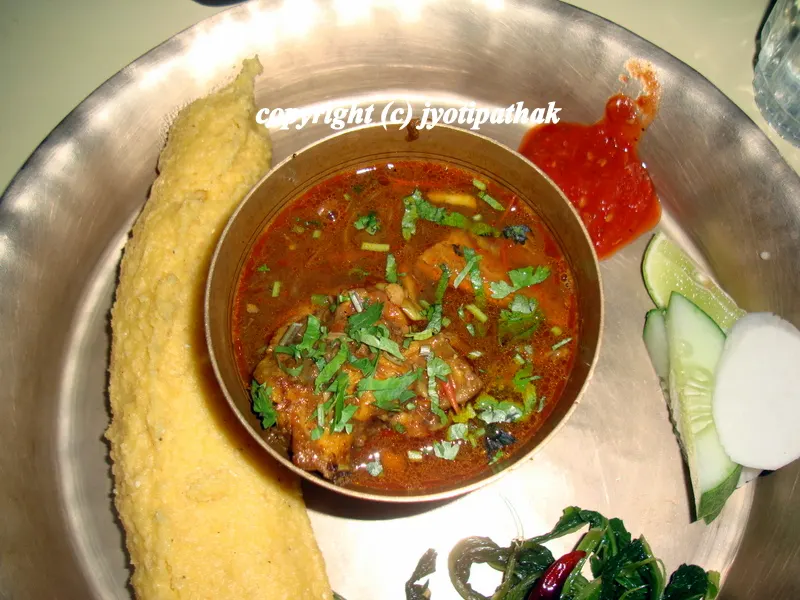
We were presented with a traditional thaal of dhindo made with makai ko pitho (corn meal) – I did not know the freshly cooked steaming dhindo could be so good. I enjoyed every bite – served in simple natural form. Thanks to the freshest locally grown raayo ko saag (mustard greens) sauteed with dried red chilies, and the local chicken with spring onions. The pickle platter consisted of fiery tomato chutney and khaadeko mula ko achaar (pickled radish).
Here are some of the informative links about Dhindo that you will enjoy reading -
From another blogger, Gary Fleener - Nepali Polenta - Roadhouse Style, please click here.
How to make Dhindo from "We all Nepali", please click here.
Off-road rambles and stomach rumbles by the Narayani - Nepali Times Blog - please click here.
From another Blogger, Sunita Giri - Shades of Life:Polenta, please click here.
Saag and Dhindo - YouTube - please click here.
Copyright Information
All information on the Taste of Nepal blog are restricted use under copyright law. You may not re-use words, stories, photographs, or other posted material without the explicit written consent and proper credit to Jyoti Pathak. If you would like to use any materials here, please contact me.